

Service | St. Louis, MO
The signs your tires need attention before a summer road trip, and how to check them yourself in your driveway.
Summer is when a Lincoln SUV earns its keep. A weekend at Lake of the Ozarks, a drive out to Hermann, a long run up I-70 toward Columbia or Kansas City. Tires that felt fine on the commute through Kirkwood or Chesterfield can act very differently with the luggage in and a few hours at highway speed.
Most tire trouble gives you a warning first: a vibration you got used to, tread wearing unevenly, or a slow leak that needs air every couple of weeks. Those are easy to shrug off until you're on the shoulder of the interstate with a flat.
Quick answer: Uneven wear, tread under 4/32 of an inch, cracks in the sidewall, a vibration at highway speed, or a tire that keeps losing air are all reasons to get your tires inspected before a road trip. Most of it takes a few minutes to check and it's far easier to handle at home than on the side of the road.
Road trip tread
4/32 of an inch or more
Legal minimum
2/32 in most states
Tire age
Check the date code
How Do You Know If Your Tread Is Too Worn?
Two coins will tell you most of what you need to know. Do both before a trip.
The penny test
Put a penny in the tread groove with Lincoln's head pointing down. If you can see all of his head, the tread is down to about 2/32 of an inch. That's the legal minimum in most states, and well past the point where a tire grips the wet.
The quarter test
For a road trip, aim for 4/32 or more. Put a quarter in the groove with Washington's head down. If tread covers part of his head, you still have a decent margin.
Wet braking distance grows noticeably below 4/32, which is why we use that number for a trip and not the legal minimum.
What Does Uneven Wear Mean?
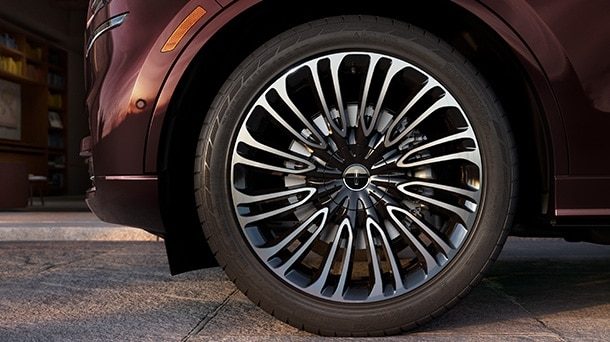
Uneven wear tells you something about the vehicle, not just the tire. Wear on the outer edges often points to underinflation, and wear down the middle to overinflation. Heavier wear on one side can mean an alignment that has drifted, sometimes from a single pothole on Manchester Road.
- Cupping or scalloped patches, often a sign of worn suspension parts
- Feathering, where tread edges are sharp on one side and rounded on the other, usually an alignment issue
- Heavier wear on the inside or outside edge, also usually alignment
- Flat spots or bald patches from a wheel that's out of balance
A tire can look new on the surface and still hide one of these patterns. A hands on inspection catches what a quick glance from the driveway won't.
Why Does a Vibration at Highway Speed Matter?
A vibration that shows up around 55 miles per hour and up usually points to a wheel that's out of balance, or a tire with a problem inside. Over a couple of hours on I-44 it puts real stress on the suspension and steering.
If it comes and goes, or gets worse after a bump, get it checked before the trip and not during it. Balancing a wheel is usually a quick job.
Tire Care AdviceSchedule a Tire Inspection
What About Sidewall Cracks and Bulges?
Cracking along the sidewall, sometimes called dry rot, tends to show up on older tires even when the tread looks fine. Missouri summers are hard on rubber, and repeated heat and UV can crack a tire before the tread wears out.
A bulge or bubble in the sidewall
The tire's internal structure has been damaged, often by a pothole or a curb. It can fail without warning under a loaded vehicle at highway speed. Replace it before any longer drive.
A tire can look new on the surface and still hide one of these patterns.
Does Tire Age Matter Even If the Tread Looks Fine?
Yes. Most manufacturers recommend replacing tires six to ten years after they were made, no matter how much tread is left, because the rubber breaks down over time. That matters for a second vehicle, or for a Lincoln that sits for long stretches in a garage in Frontenac or Ladue.
The date is stamped on the sidewall as a four digit code, two digits for the week and two for the year. Our service team can read it for you during any visit.
Should Tires Be Rotated Before a Long Trip?
A rotation helps all four tires wear evenly, which stretches the life of the set. If it's been more than 5,000 to 7,000 miles since your last one, book it before the trip.
St. Louis driver tip
Set your pressure to the number on the sticker inside the driver's door, not the number printed on the tire. The tire's number is the maximum, not the recommendation. Underinflated tires run hotter at highway speed, and heat is a common cause of tire failure.
Book it your way
Schedule online, in the Lincoln app, or call us at 314-729-2700. Pickup and Delivery is complimentary for vehicles within the new vehicle limited warranty, so we can come get the car while you stay at work.
See Pickup and DeliveryQuestions Drivers Ask About Tire Wear and Replacement
How often should tires be replaced?
Most tires last somewhere between 40,000 and 60,000 miles, depending on the tire, how you drive, and how well they're rotated and maintained. Tread depth and age both matter, so a tire can need replacing sooner if it shows uneven wear or cracking.
Can I mix new and used tires on the same vehicle?
It's not recommended for most vehicles, especially all wheel drive Lincoln SUVs, since a gap in tread depth can affect handling and put uneven strain on the drivetrain. If only two tires need replacing, the newer pair usually goes on the rear axle.
What does the wear bar on a tire indicate?
The wear bar is a raised strip molded into the tread groove. It sits flush with the surrounding tread once depth drops to about 2/32 of an inch. If the tread is level with it across a good part of the tire, replacement should happen soon.
Questions Drivers Ask About Tire Pressure
What tire pressure should I use for a loaded road trip?
Use the pressure on the sticker inside the driver's door jamb. Some owners add a few pounds when the vehicle is heavily loaded, which can be fine, but check the right adjustment for your Lincoln with our service team.
How often should tire pressure be checked?
Once a month is a good habit, plus a check before any longer trip. Pressure drops with temperature swings, so a tire that was fine in warm weather can read low once it cools off.
What does the tire pressure warning light mean?
It comes on when one or more tires has dropped well below the recommended pressure. Check all four with a gauge as soon as it's safe and add air to the door jamb number. If the light stays on, a sensor may need attention, and our service team can check it.
Questions Drivers Ask About Tire Service
How long does a tire inspection take?
A basic visual check and pressure check is quick. If a rotation or balance is needed, plan for more time. Ask your advisor for an estimate when you book, so you can fit it in before a weekend trip.
Is a spare tire or repair kit enough for a road trip?
A properly inflated spare or a working repair kit is useful, but neither replaces four tires in good shape. A spare is meant to get you to the nearest service location, not to be driven far at highway speed.
Can a tire be repaired instead of replaced?
A puncture in the tread area, away from the sidewall, can often be repaired with a proper plug and patch. A sidewall puncture, a repeat puncture in the same spot, or damage near the edge of the tread usually means replacement.
Questions Drivers Ask About New Tires and Setup
What size tires does my Lincoln use?
The size is printed on the sticker inside the driver's door jamb and in the owner's guide, and the same code is molded into the tire sidewall. Match the size and load rating for your specific vehicle, not whatever the last set happened to be.
Do new tires need to be balanced?
Balancing is a standard part of mounting new tires, since even a small weight difference around the wheel can cause a vibration at highway speed. It's a quick step that protects ride comfort and tire life.
Should I get an alignment when I buy new tires?
An alignment check is a smart companion to new tires, since a drifted alignment can wear a fresh set unevenly in a short time. If your old tires wore on one edge, checking alignment at the same visit is even more useful.
Questions Drivers Ask About Seasonal Tire Care
Does St. Louis weather affect how long tires last?
Yes. Summer heat ages rubber faster, and winter road treatments and temperature swings add their own wear. If you drive year round in the St. Louis area, a tire check twice a year makes sense, once before summer and once before winter.
Should all season tires be swapped for winter tires in St. Louis?
Most St. Louis drivers do fine year round on a quality all season tire, since our winters are milder than up north. If you regularly drive in snow or ice, or want extra margin on the coldest days, dedicated winter tires are worth a look.
Why does my tire pressure drop when the weather gets colder?
Air contracts as temperatures fall, and tire pressure drops roughly one pound per square inch for every ten degree drop. That's why a tire that read fine in October can set off a warning on the first cold morning of the season.
Planning a Road Trip Soon?
Have your tires inspected before you load up and go.
Visit Our Service DepartmentKeep reading: If your AC has felt weak lately, read signs your Lincoln needs AC service before a St. Louis summer.