Blog

Lincoln Rejuvenate: Luxury That Restores You

In today’s fast-paced world, true luxury isn’t just about leather seats or horsepower—it’s about how you feel. It’s about stepping into a space that restores you. That’s exactly what Lincoln is delivering with the Rejuvenate feature, available on select Lincoln models like the new Nautilus, in partnership with Calm, the #1 app for meditation and mindfulness. Whether you’re easing into your day or recovering from the chaos of it, Lincoln Rejuvenate offers a few minutes of focused stillness—inside your vehicle.   What Is Lincoln Rejuvenate?Lincoln Rejuvenate is an in-vehicle experience designed to help you recharge and reset—right from the driver’s seat. When your Lincoln is in Park, the system guides you through a five to ten-minute wellness routine that stimulates your senses and restores your focus. Here’s what it does:
  • Activates massaging seat adjustments
  • Adjusts heating or ventilation for comfort
  • Engages ambient lighting and soft audio cues
  • Releases subtle, curated scents
  • Plays calming, guided visuals on your display screen
The result? A multisensory experience crafted to refresh your body and mind.   Lincoln x Calm: Mindfulness Meets Mobility Lincoln’s partnership with Calm brings scientifically backed mindfulness to the road. Every retail Lincoln client in the U.S., Canada, and Mexico now receives a complimentary one-year Calm membership—a $69.99 USD value. Through the Lincoln Way® App, you can access:
  • Daily meditations
  • Mindful breathing exercises
  • Sleep stories
  • Calming music and sounds
Whether you’re battling traffic or preparing for a long drive, Lincoln and Calm are offering you a better way to begin—centered, calm, and fully present.     Why Mindfulness Matters Behind the Wheel Did you know mindfulness has been shown to:
  • Reduce distracted driving (like phone usage)
  • Improve focus and awareness
  • Lower aggression and road rage
  • Promote safe and responsive behavior in stressful situations
Lincoln understands that wellness isn’t just about comfort—it’s about safety, too.   Wellness, Reimagined The Lincoln experience has always aimed to leave you refreshed and recharged. From the gentle design cues to quiet interiors and effortless technology, everything about a Lincoln is engineered to support your well-being. Now, with Lincoln Rejuvenate and Calm, that experience goes deeper. It meets you where you are—before work, after school drop-off, in the grocery store parking lot—and gently brings you back to yourself.   Experience Lincoln Rejuvenate at Dave Sinclair Lincoln At Dave Sinclair Lincoln, we believe that wellness is the new luxury. We invite you to experience this innovative feature in person and explore how Lincoln is setting a new standard for thoughtful, human-centered design.   📞 Call us at (314) 729-2700 📍 Visit us at 13980 Manchester Rd. St. Louis, MO 63011 🔗 Explore the new Lincoln lineup   You don’t need a weekend away to recharge. You just need ten minutes—and a Lincoln.

Recommended Posts

Woman driving a Lincoln Nautilus with the wide digital display and a sunny hillside road ahead

Warning Signs Your Lincoln's Battery Needs Attention This Summer

Service  |  St. Louis, MO Why a St. Louis summer wears out a Lincoln battery, what the warning signs look like, and what a battery test involves. Most people blame cold mornings for a dead battery. Summer heat does the damage, and winter just exposes it. A battery that limped through last winter can quit in a hot St. Louis August, usually in a parking lot instead of your driveway. Heat speeds up the chemistry inside a battery. It evaporates fluid and corrodes the internal parts faster. After a few summers of that, especially parked in direct sun around Chesterfield or Manchester, a battery can reach the end of its life sooner than it would in a milder climate. Quick answer: Slow cranking, dashboard warning lights, dim headlights, a swollen battery case, or a battery older than three to five years are all reasons to have it tested before it fails. Heat wears a battery down more than cold does, so one that seemed fine all winter can still be close to done by late summer. Typical life Three to five years Main culprit Summer heat Smart move Test before it fails In this post Summer versus winter Warning signs How long it lasts Alternator or battery The battery test Extending battery life Why Is Summer Harder on a Battery Than Winter? Cold weather reveals a weak battery because low temperatures cut the current it can deliver. That's why so many failures happen on cold mornings. Heat is what causes the weakness in the first place. High under hood temperatures break down internal parts and evaporate electrolyte faster than a cooler climate would. One humid St. Louis summer stresses a battery more than a mild spring or fall does over several months. That's why a battery test in August often finds what wasn't obvious in April. What Are the Warning Signs Before a Battery Fails Completely? A battery rarely fails with zero warning, even though it can feel sudden when it happens. Watch for these before you need a jump in a parking lot. Slow cranking The engine turns over slower than usual before it starts. Dash warning light A battery warning light comes on. Dim lights Headlights or interior lights look dimmer than normal, especially at idle. Swollen case The battery case looks bloated or misshapen. Rotten egg smell You notice it near the engine bay. Corrosion Powdery buildup around the terminals. Any one of these is worth a quick check. A couple together are a strong signal to get a battery test done soon, not at your next scheduled visit. How Long Should a Car Battery Last? Most batteries are rated for three to five years, though climate, driving habits, and how the vehicle is used all matter. Short trips, extreme heat, and long stretches sitting unused all shorten that. Not sure how old yours is? Our service team can read the manufacture date stamped on the case. A battery near or past four years is worth testing even if it still starts the vehicle, since heat damage can end it with little warning. Battery Service Advice Schedule a Battery Test Can a Weak Alternator Look Like a Battery Problem? Yes, and it's one of the more common mix-ups our service advisors talk through. A battery stores power, and the alternator recharges it while the engine runs. If the alternator isn't charging properly, even a healthy battery slowly loses power and won't start the vehicle. That looks just like a worn out battery. A proper diagnostic tests the battery and the charging system together. Replace a battery without checking the alternator and the same symptoms can come right back. That's why a real test beats swapping in a parts store battery on a guess. A battery that limped through last winter can fail without warning in the middle of a hot St. Louis August. What Happens During a Battery Test? The test is quick, and you get a clear answer about whether the battery is holding up. The technician looks at three things. 1 Load test This measures how well the battery holds and delivers power under simulated demand, which tells you more than a voltage check alone. 2 Terminals and cables The technician looks for corrosion and makes sure the battery is secure. 3 Charging system Output is checked while the engine runs, so a weak alternator doesn't get blamed on a good battery. If a replacement is recommended, we'll go over the right specification for your Lincoln model. We won't default to a generic one. Is There a Way to Extend a Battery's Life in Summer Heat? Park in the shade or a garage when you can. Less heat means less wear. Keep the terminals clean too, since a weak connection makes the battery and alternator work harder. St. Louis driver tip A second vehicle that sits for weeks in August heat tends to lose charge faster. Drive it for a while every week or two so the alternator can keep the battery topped off. Book it your way Schedule online, in the Lincoln app, or call us at 314-729-2700. Pickup and Delivery is complimentary for vehicles within the new vehicle limited warranty, so we can come get the car while you stay at work. See Pickup and Delivery Questions Owners Ask About Diagnosing Battery Problems How do I know if it's the battery or the alternator? A vehicle that struggles to start but runs fine once going often points to the battery. One that starts fine but stalls, dims its lights while driving, or shows a charging warning is more likely an alternator issue. A combined test is the most reliable way to know. Can extreme heat damage a battery even if it still starts the car? Yes. Heat damage builds slowly inside the battery while it keeps starting the vehicle just fine. That's how a battery can work every day and then fail suddenly once the internal wear crosses a line. Can cold weather also affect a battery that was already weakened by heat? Yes. A battery that lost capacity over a hot summer often shows it once cold weather arrives, since low temperatures cut the current a weakened battery can still deliver. That's why one that seemed fine in fall can fail on a cold morning. Questions Owners Ask About Battery Testing and Service Should I test my battery even if it seems to be working fine? If your battery is more than three years old, a quick test during a regular service visit is a smart precaution, especially going into or coming out of a Missouri summer. It can catch a weak battery before it leaves you stranded. How long does a battery replacement take? It depends on the vehicle and the day. Ask your advisor for an estimate when you book. If the new battery needs to be registered with the vehicle's computer, our technicians handle that during the same visit. What type of battery does a Lincoln need? The correct group size and specification depend on your Lincoln's model, engine, and equipment. Our service team looks up the exact specification for your vehicle instead of assuming a generic battery will fit or perform right. Questions Owners Ask About Jump Starts and Setup Is it safe to jump start a Lincoln with an internal battery issue? A jump start can get the vehicle running for now, but it doesn't fix a battery problem. If a battery needs a jump more than once, it should be tested and probably replaced, not jumped again and called fixed. Does a new battery need any special setup on a modern Lincoln? Some newer vehicles need the onboard computer to be registered to a new battery so charging is managed correctly. Our technicians handle this as part of a proper installation, which is one more reason to have the work done by a team that knows your model. Can I replace a Lincoln battery myself? The battery can be swapped by hand, but many modern vehicles expect the new battery to be registered with the electrical system afterward. Skip that step and charging can be affected, so it's smart to have a service team do the work. Questions Owners Ask About Everyday Battery Care Do short trips shorten battery life? They can. Starting the engine takes a lot of energy, and a brief trip may not give the alternator time to replace it. A longer drive now and then helps, and a battery test will show how much reserve is left. How do I know if battery terminals are corroded? Corrosion usually looks like a white, blue, or green powdery buildup around the terminals. A visual check is quick, and heavy buildup is worth having cleaned and tested, since it can cause hard starts that look like a failing battery. Is it normal for a battery to drain faster in a vehicle that sits unused? Yes. A vehicle that sits for long stretches loses a little charge even while parked, and modern vehicles with more onboard electronics tend to draw a bit more than older ones. Driving every week or two keeps the battery charged. Questions Owners Ask About Ownership and Troubleshooting Does the Lincoln app show battery health information? The Lincoln app can show vehicle health alerts, but for a real battery health answer you need an in person test at our service department. Don't rely on the app alone. What happens to my settings if the battery is disconnected? Some settings and learned values can reset when power is interrupted, and a few systems may need to relearn afterward. A service team that does battery work regularly knows which steps apply to your model. What should I do if my Lincoln won't start and I'm away from home? Start with the basics, like the key fob battery and a firm connection at the dash, then check your owner's guide before you try a jump start. If it still won't start, roadside assistance or a call to our service department can help you pick the safest next step. Not Sure How Old Your Battery Is? A quick test can tell you before it becomes a problem. Visit Our Service Department Prefer We Come to You? Lincoln Mobile Service lists batteries among what it can do at your location. Explore Mobile Service Keep reading: Heat hits more than the battery. Read the signs your Lincoln needs AC service.

Blue gray Lincoln Corsair parked on a desert road at sunset with a woman standing beside it

Is the Lincoln Corsair Right for St. Louis Driving? A Closer Look at Compact Luxury

Model  |  St. Louis, MO Who the Lincoln Corsair suits St. Louis drivers, how it handles city parking, and when a bigger Lincoln makes more sense. A luxury SUV doesn't have to take up the whole driveway. For a lot of St. Louis drivers, the case for the Lincoln Corsair has less to do with what it lacks next to the Lincoln Nautilus, Lincoln Aviator, or Lincoln Navigator and more to do with a week built around city streets, tight parking, and a full calendar. The Lincoln Corsair is the smallest SUV in the Lincoln lineup. Smallest here means easier to park near Clayton, simpler in a Webster Groves garage, and less work in the stop and go on Manchester Road. It still has the quiet, comfortable cabin Lincoln is known for. Quick answer: The Lincoln Corsair is a good fit for St. Louis drivers who want Lincoln comfort and technology without a midsize or full size footprint, especially commuters, couples, empty nesters, and anyone who parks in tight garages around Clayton, Brentwood, or the Central West End. If you need three rows or regular towing, look at a bigger Lincoln. Seats Five, in two rows Fits City parking and commutes Look bigger if You need three rows In this post Who it's for City driving Interior Cargo and passengers Value Weekend trips Who Is the Lincoln Corsair Built For? Think about the driving pattern first, then the driver. If most of your week is appointments, errands, and city streets instead of long highway runs with a full vehicle, the Lincoln Corsair's size is an advantage. That describes a lot of St. Louis shoppers: professionals commuting into Clayton or downtown, empty nesters who don't need a third row anymore, and couples who want a refined daily driver without a family hauler's footprint. First time luxury buyers like it too, because it's an easy way into the Lincoln experience. How Does the Lincoln Corsair Handle City Driving Compared to Larger Lincoln SUVs? Size shows up in small ways all day. A tight downtown garage, a narrow street in the Central West End, or a crowded Kirkwood shopping center are all easier in the Lincoln Corsair than in a three row SUV. St. Louis driver tip Test the vehicle where you'll really park it. Back into the tightest spot you use, whether that's a garage in Clayton or a lot near a Cardinals game, and see how it feels. A highway test drive won't tell you much about that. Visibility matters more in the city than it does on the highway. A smaller footprint generally means a shorter hood and a tighter turning circle, and both help on crowded streets. Does the Lincoln Corsair Still Feel Like a True Lincoln Inside? Yes. This is where the Lincoln Corsair separates itself from compact luxury SUVs that treat the small one as an afterthought. The cabin has the same focus on quiet, comfortable seating, and clean technology as the larger Lincoln SUVs, scaled to two rows. For a driver who wants Lincoln's approach to comfort without the size, that consistency counts for more than any one feature on a spec sheet. Sit in it and judge for yourself. View Corsair Inventory Browse New Lincoln Inventory How Much Cargo and Passenger Space Does the Lincoln Corsair Really Offer? The Lincoln Corsair seats five across two rows, which covers most St. Louis households. Cargo room behind the second row suits weekly grocery runs, a couple of suitcases for a weekend away, or gear for an afternoon at Forest Park. It won't match a Lincoln Aviator or Lincoln Navigator for bigger hauls. Where it may not be enough is a household that regularly carries more than a couple of passengers in back, or a family that needs three rows for kids and gear every week. In that case a Lincoln Nautilus or Lincoln Aviator is more realistic, and it's worth driving both before you decide. Smallest here means easier to park near Clayton. How Does the Lincoln Corsair Compare on Value Against a Larger Lincoln SUV? The Lincoln Corsair is a way into Lincoln comfort and technology in a smaller size. Our inventory and model pages are the place to see current pricing for each one, since figures change by trim and model year. The tradeoff is capability, not quality. Every Lincoln Corsair reflects Lincoln's approach to ride comfort and cabin refinement, so the comparison is really about how much room and seating flexibility your household needs. Is the Lincoln Corsair a Good Fit for Occasional Weekend Trips? For a couple heading to Ste. Genevieve for the day, or out to Hermann for a wine country weekend, the Lincoln Corsair handles that kind of trip comfortably. The cabin stays quiet on the highway, the seats hold up over a couple of hours, and there's room for an overnight bag or two. It feels tighter on a longer trip with more people or gear, like a family run to Lake of the Ozarks with coolers and golf clubs. If that's a regular part of your year, weigh the Lincoln Corsair against the added space of a Lincoln Nautilus. The Sinclair Promise If you don't love your car within seven days or 500 miles, bring it back. No questions asked. It's how Dave Sinclair built this store, and it still stands. Read the Sinclair Promise Questions Shoppers Ask About the Lincoln Corsair Lineup Is the Lincoln Corsair considered a luxury SUV? Yes. The Lincoln Corsair is the smallest SUV in the Lincoln lineup, and it carries the brand's approach to luxury with a refined cabin and a quiet ride, just in a smaller package than the Lincoln Nautilus, Lincoln Aviator, or Lincoln Navigator. How does the Lincoln Corsair compare to a compact SUV from a non-luxury brand? The Lincoln Corsair is aimed at buyers who want a quieter cabin, upscale materials, and more comfort and driver assistance technology than a mainstream compact. Drive both and see whether the difference is worth it to you. What trim levels does the Lincoln Corsair offer? Trims and features change by model year. Our sales team can walk through what's in stock right now and what each trim adds. Questions Shoppers Ask About Capability Can the Lincoln Corsair tow anything? It isn't built as a primary towing vehicle the way a Lincoln Aviator or Lincoln Navigator can be equipped to be. If you tow often, start the conversation with a larger Lincoln SUV. Does the Lincoln Corsair come with all wheel drive? All wheel drive has been offered on the Lincoln Corsair, and it adds confidence in Missouri winter weather. Availability varies by trim and model year, so confirm it on the specific vehicle you're considering. What powertrains are available on the Lincoln Corsair? Powertrain choices vary by model year and trim, so the most reliable answer comes from the vehicles on the lot. Our team can walk through what each Lincoln Corsair in inventory offers and how the options differ day to day. Questions Shoppers Ask About Fit and Lifestyle Is the Lincoln Corsair a good choice for a first luxury vehicle? It's one of the easier ways into the Lincoln lineup, with a manageable size and the comfort and technology the brand is known for. Plenty of shoppers moving up to their first luxury vehicle start here. Is the Lincoln Corsair a good choice for a growing family? It can work well for a smaller family with one or two kids, especially with car seats in the second row. If you expect to need more passenger space or a third row, compare it with the Lincoln Nautilus or Lincoln Aviator first. Is the Lincoln Corsair easy to park in tight St. Louis spots? The compact footprint is one of its practical advantages over larger Lincoln SUVs, especially in tight parking structures and older neighborhood streets in Clayton and Kirkwood. A test drive in the parking situation you face most is the clearest way to judge it. Questions Shoppers Ask About Space and Ownership How does the Lincoln Corsair's cargo space compare to a Lincoln Nautilus? The Lincoln Nautilus is the larger of the two, and it offers more room behind the second row. If you regularly carry strollers, sports gear, or big purchases, drive both and see the difference yourself. Does the Lincoln Corsair hold its value well? Resale depends on trim, mileage, condition, and the market when you sell, so no one can promise a figure. Keeping up with scheduled maintenance and choosing a well equipped trim both tend to help. What is the difference between a new and Certified Pre-Owned Lincoln Corsair? A new Lincoln Corsair comes with the factory warranty and the latest features for its model year. A Certified Pre-Owned one has been through the program's inspection and typically includes a limited warranty, often at a lower price, which makes it a reasonable middle option. Questions Shoppers Ask About Features and Shopping What driver assistance features does the Lincoln Corsair offer? Lincoln includes driver assistance technology on the Lincoln Corsair, and the exact set varies by trim and model year. Ask our team to confirm which features are on the specific vehicle you're considering. Can I drive a Lincoln Corsair and a Lincoln Nautilus back to back? Yes, and it's a good way to compare ride, cabin space, and visibility without relying on memory. Let our team know ahead of time so both are ready when you get here. Is leasing a Lincoln Corsair a good fit for my situation? Leasing tends to suit drivers who like a newer vehicle every few years and stay within a set annual mileage. Buying can make more sense if you drive a lot of miles or plan to keep it long term, and our finance team can lay out both side by side. Have a Trade-In? Find out what your current vehicle is worth first. Value Your Trade Want to Start With Financing? Get pre-approved before you visit. Get Approved Keep reading: Not sure the Lincoln Corsair is the right size? Read how to pick the right Lincoln SUV for your lifestyle.

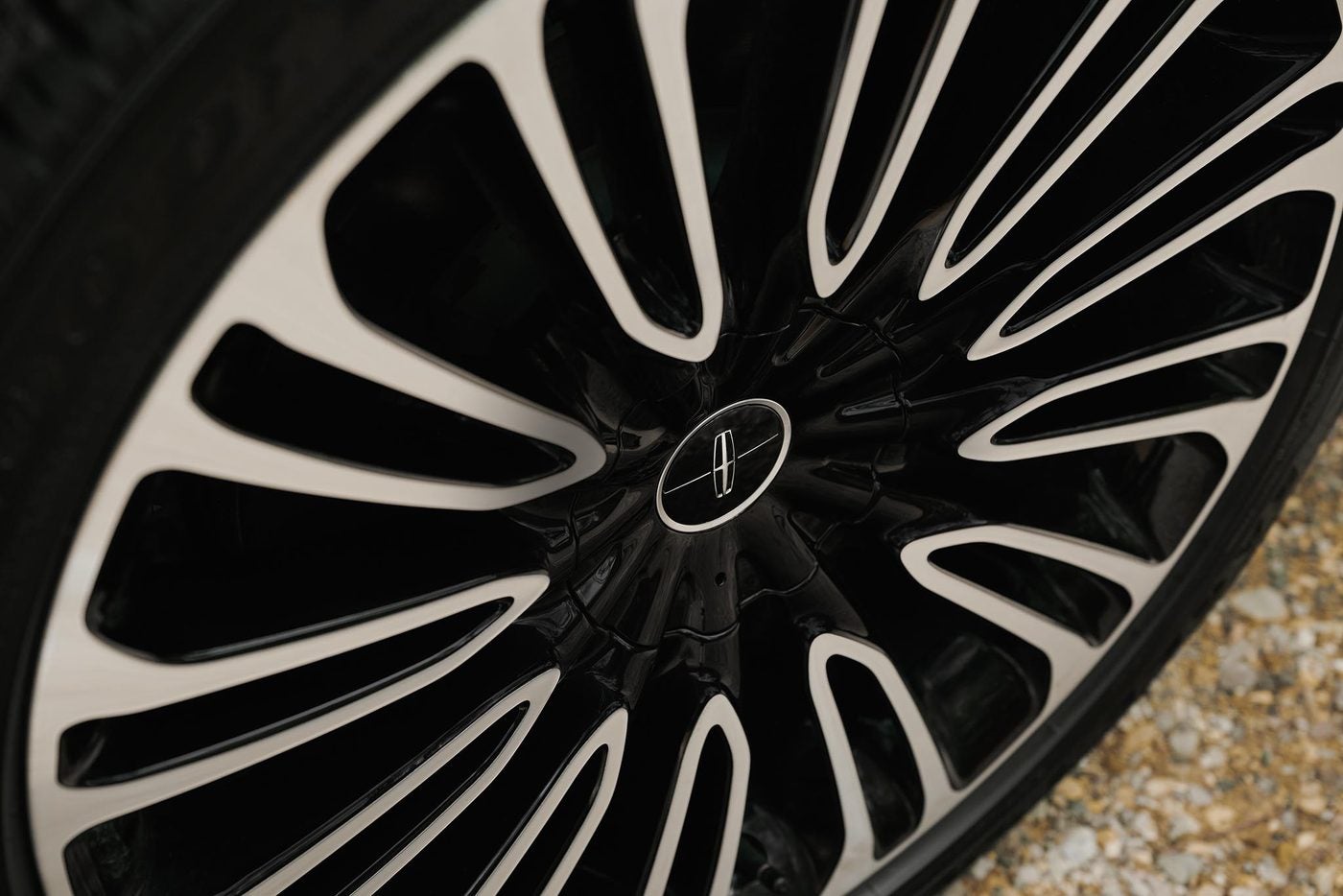
Close view of a black and chrome multi spoke wheel on a Lincoln Aviator Black Label

Signs You Need New Tires Before Your Next Road Trip

Service  |  St. Louis, MO The signs your tires need attention before a summer road trip, and how to check them yourself in your driveway. Summer is when a Lincoln SUV earns its keep. A weekend at Lake of the Ozarks, a drive out to Hermann, a long run up I-70 toward Columbia or Kansas City. Tires that felt fine on the commute through Kirkwood or Chesterfield can act very differently with the luggage in and a few hours at highway speed. Most tire trouble gives you a warning first: a vibration you got used to, tread wearing unevenly, or a slow leak that needs air every couple of weeks. Those are easy to shrug off until you're on the shoulder of the interstate with a flat. Quick answer: Uneven wear, tread under 4/32 of an inch, cracks in the sidewall, a vibration at highway speed, or a tire that keeps losing air are all reasons to get your tires inspected before a road trip. Most of it takes a few minutes to check and it's far easier to handle at home than on the side of the road. Road trip tread 4/32 of an inch or more Legal minimum 2/32 in most states Tire age Check the date code In this post Tread depth Uneven wear Highway vibration Sidewall damage Tire age Rotation and pressure How Do You Know If Your Tread Is Too Worn? Two coins will tell you most of what you need to know. Do both before a trip. 1 The penny test Put a penny in the tread groove with Lincoln's head pointing down. If you can see all of his head, the tread is down to about 2/32 of an inch. That's the legal minimum in most states, and well past the point where a tire grips the wet. 2 The quarter test For a road trip, aim for 4/32 or more. Put a quarter in the groove with Washington's head down. If tread covers part of his head, you still have a decent margin. Wet braking distance grows noticeably below 4/32, which is why we use that number for a trip and not the legal minimum. What Does Uneven Wear Mean? Uneven wear tells you something about the vehicle, not just the tire. Wear on the outer edges often points to underinflation, and wear down the middle to overinflation. Heavier wear on one side can mean an alignment that has drifted, sometimes from a single pothole on Manchester Road. Cupping or scalloped patches, often a sign of worn suspension parts Feathering, where tread edges are sharp on one side and rounded on the other, usually an alignment issue Heavier wear on the inside or outside edge, also usually alignment Flat spots or bald patches from a wheel that's out of balance A tire can look new on the surface and still hide one of these patterns. A hands on inspection catches what a quick glance from the driveway won't. Why Does a Vibration at Highway Speed Matter? A vibration that shows up around 55 miles per hour and up usually points to a wheel that's out of balance, or a tire with a problem inside. Over a couple of hours on I-44 it puts real stress on the suspension and steering. If it comes and goes, or gets worse after a bump, get it checked before the trip and not during it. Balancing a wheel is usually a quick job. Tire Care Advice Schedule a Tire Inspection What About Sidewall Cracks and Bulges? Cracking along the sidewall, sometimes called dry rot, tends to show up on older tires even when the tread looks fine. Missouri summers are hard on rubber, and repeated heat and UV can crack a tire before the tread wears out. A bulge or bubble in the sidewall The tire's internal structure has been damaged, often by a pothole or a curb. It can fail without warning under a loaded vehicle at highway speed. Replace it before any longer drive. A tire can look new on the surface and still hide one of these patterns. Does Tire Age Matter Even If the Tread Looks Fine? Yes. Most manufacturers recommend replacing tires six to ten years after they were made, no matter how much tread is left, because the rubber breaks down over time. That matters for a second vehicle, or for a Lincoln that sits for long stretches in a garage in Frontenac or Ladue. The date is stamped on the sidewall as a four digit code, two digits for the week and two for the year. Our service team can read it for you during any visit. Should Tires Be Rotated Before a Long Trip? A rotation helps all four tires wear evenly, which stretches the life of the set. If it's been more than 5,000 to 7,000 miles since your last one, book it before the trip. St. Louis driver tip Set your pressure to the number on the sticker inside the driver's door, not the number printed on the tire. The tire's number is the maximum, not the recommendation. Underinflated tires run hotter at highway speed, and heat is a common cause of tire failure. Book it your way Schedule online, in the Lincoln app, or call us at 314-729-2700. Pickup and Delivery is complimentary for vehicles within the new vehicle limited warranty, so we can come get the car while you stay at work. See Pickup and Delivery Questions Drivers Ask About Tire Wear and Replacement How often should tires be replaced? Most tires last somewhere between 40,000 and 60,000 miles, depending on the tire, how you drive, and how well they're rotated and maintained. Tread depth and age both matter, so a tire can need replacing sooner if it shows uneven wear or cracking. Can I mix new and used tires on the same vehicle? It's not recommended for most vehicles, especially all wheel drive Lincoln SUVs, since a gap in tread depth can affect handling and put uneven strain on the drivetrain. If only two tires need replacing, the newer pair usually goes on the rear axle. What does the wear bar on a tire indicate? The wear bar is a raised strip molded into the tread groove. It sits flush with the surrounding tread once depth drops to about 2/32 of an inch. If the tread is level with it across a good part of the tire, replacement should happen soon. Questions Drivers Ask About Tire Pressure What tire pressure should I use for a loaded road trip? Use the pressure on the sticker inside the driver's door jamb. Some owners add a few pounds when the vehicle is heavily loaded, which can be fine, but check the right adjustment for your Lincoln with our service team. How often should tire pressure be checked? Once a month is a good habit, plus a check before any longer trip. Pressure drops with temperature swings, so a tire that was fine in warm weather can read low once it cools off. What does the tire pressure warning light mean? It comes on when one or more tires has dropped well below the recommended pressure. Check all four with a gauge as soon as it's safe and add air to the door jamb number. If the light stays on, a sensor may need attention, and our service team can check it. Questions Drivers Ask About Tire Service How long does a tire inspection take? A basic visual check and pressure check is quick. If a rotation or balance is needed, plan for more time. Ask your advisor for an estimate when you book, so you can fit it in before a weekend trip. Is a spare tire or repair kit enough for a road trip? A properly inflated spare or a working repair kit is useful, but neither replaces four tires in good shape. A spare is meant to get you to the nearest service location, not to be driven far at highway speed. Can a tire be repaired instead of replaced? A puncture in the tread area, away from the sidewall, can often be repaired with a proper plug and patch. A sidewall puncture, a repeat puncture in the same spot, or damage near the edge of the tread usually means replacement. Questions Drivers Ask About New Tires and Setup What size tires does my Lincoln use? The size is printed on the sticker inside the driver's door jamb and in the owner's guide, and the same code is molded into the tire sidewall. Match the size and load rating for your specific vehicle, not whatever the last set happened to be. Do new tires need to be balanced? Balancing is a standard part of mounting new tires, since even a small weight difference around the wheel can cause a vibration at highway speed. It's a quick step that protects ride comfort and tire life. Should I get an alignment when I buy new tires? An alignment check is a smart companion to new tires, since a drifted alignment can wear a fresh set unevenly in a short time. If your old tires wore on one edge, checking alignment at the same visit is even more useful. Questions Drivers Ask About Seasonal Tire Care Does St. Louis weather affect how long tires last? Yes. Summer heat ages rubber faster, and winter road treatments and temperature swings add their own wear. If you drive year round in the St. Louis area, a tire check twice a year makes sense, once before summer and once before winter. Should all season tires be swapped for winter tires in St. Louis? Most St. Louis drivers do fine year round on a quality all season tire, since our winters are milder than up north. If you regularly drive in snow or ice, or want extra margin on the coldest days, dedicated winter tires are worth a look. Why does my tire pressure drop when the weather gets colder? Air contracts as temperatures fall, and tire pressure drops roughly one pound per square inch for every ten degree drop. That's why a tire that read fine in October can set off a warning on the first cold morning of the season. Planning a Road Trip Soon? Have your tires inspected before you load up and go. Visit Our Service Department Need New Tires? Check current service and parts offers before you book. View Service Specials Keep reading: If your AC has felt weak lately, read signs your Lincoln needs AC service before a St. Louis summer.