How Lincoln BlueCruise Changes Everyday Driving Driving around St. Louis can change quickly. One minute you are moving comfortably along I-64 near Frontenac, and the next you are slowing down near I-270, watching traffic tighten around you as everyone heads toward Clayton, Chesterfield, downtown St. Louis or Lambert International Airport. For many local drivers, the daily routine is not one long road trip. It is a series of short, busy, attention-heavy drives that can wear you down over time.
That is where Lincoln BlueCruise becomes more than just another technology feature. It is not about turning your Lincoln into a self-driving vehicle. It is about making the parts of driving that feel the most repetitive, tiring and demanding feel more controlled and more comfortable.
For St. Louis drivers who spend time on I-64, I-44, I-55, I-70 or I-270, Lincoln BlueCruise can add hands-free highway driving assistance on compatible mapped highways, helping your Lincoln manage steering, braking and acceleration while you keep your eyes on the road. The result is a driving experience that feels more relaxed without removing the driver from the responsibility of driving.
At Dave Sinclair Lincoln St. Louis, this is one of the Lincoln technologies we believe luxury shoppers should understand before they choose their next SUV. Lincoln BlueCruise fits the brand because it is not loud, flashy or complicated. It supports the larger Lincoln idea of quiet luxury: less stress, more confidence and a calmer drive. Traffic Around St. Louis Is Not What It Used To Be St. Louis drivers know that traffic is not limited to one part of town. A morning commute from Chesterfield to Clayton can feel very different from an afternoon drive from Ballwin to downtown St. Louis. A quick trip on Manchester Road can become a longer drive once you connect to I-270, and a weekend run to a Cardinals game can mean stop-and-go traffic before you ever reach the city.
Then there are the longer local and regional drives. Maybe you are heading from West County to Lambert International Airport for an early flight. Maybe you are driving across Missouri for a weekend at the Lake of the Ozarks. Maybe you are visiting family in Columbia, heading to Kansas City, or taking I-55 toward southern Missouri. These are exactly the kinds of drives where comfort, awareness and fatigue reduction matter.
Luxury is often described in terms of materials, design and performance, but for many St. Louis drivers, real luxury is how you feel after the drive. Do you arrive tired and tense, or do you arrive more settled? Do you feel like the vehicle helped you manage the trip, or did every mile feel like work?
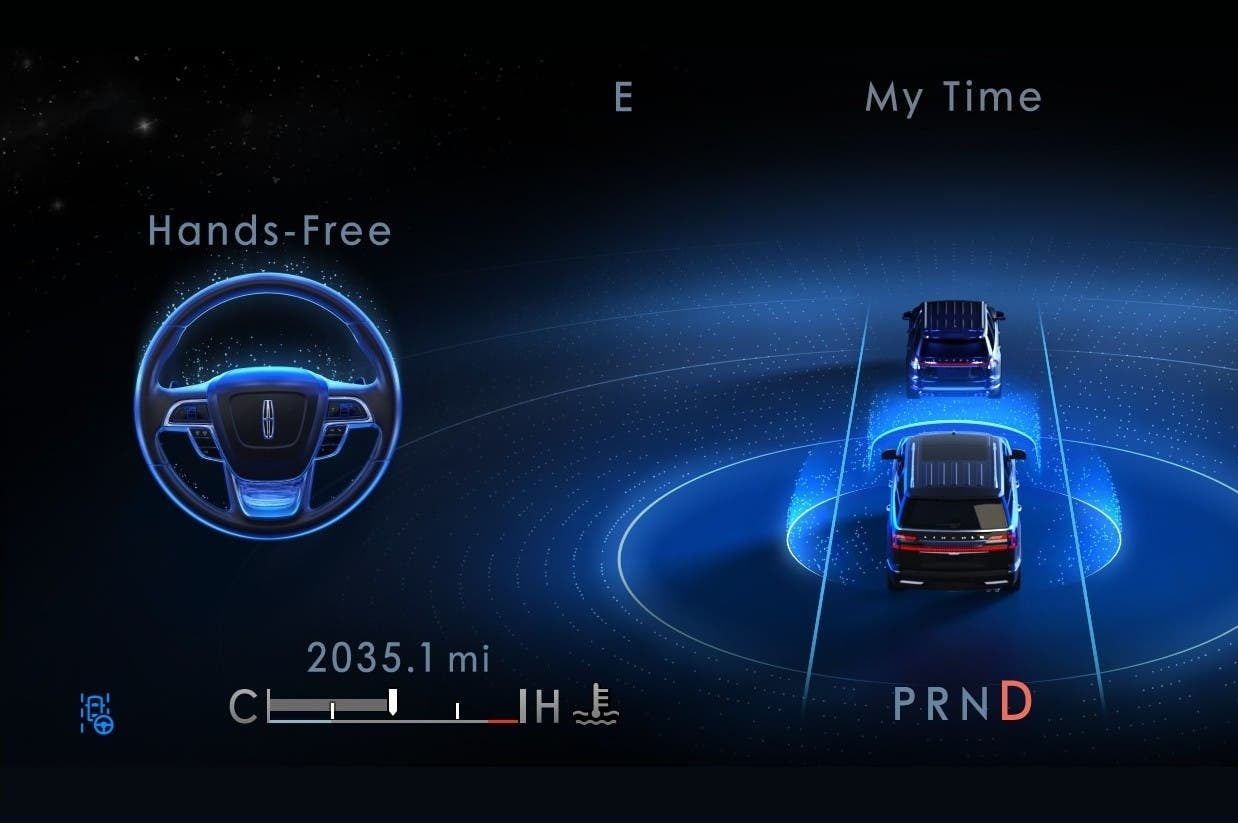
Lincoln BlueCruise is designed for that real-world question. It helps reduce the constant steering corrections, speed adjustments and lane-centering effort that can make highway driving feel more draining than it should. What Is Lincoln BlueCruise? Lincoln BlueCruise is an available hands-free highway driving technology that builds on Intelligent Adaptive Cruise Control. When conditions are right and you are driving on a compatible hands-free Blue Zone, BlueCruise can help control steering, braking and acceleration while keeping the vehicle centered in its lane.
The important part is this: BlueCruise is a driver-assistance feature. It is not full autonomous driving. You still need to pay attention, watch the road and be ready to resume control when needed.
BlueCruise uses a driver-facing camera to help confirm that your eyes remain on the road. That matters because the system is not designed for distracted driving. It is designed to assist attentive driving. Your hands may be off the wheel in approved conditions, but your focus still needs to be forward.
In simple terms, BlueCruise helps with: Maintaining lane position on compatible highways Adjusting speed with traffic flow Reducing repetitive steering input Making longer highway drives feel less tiring Supporting a calmer, more confident driving experience For a Lincoln shopper, the benefit is not just the technology itself. The benefit is how naturally it fits into the rest of the vehicle. In a Lincoln Nautilus, Aviator or Navigator, BlueCruise works alongside a quiet cabin, comfortable seating, intuitive displays and refined ride quality to create a more relaxing kind of highway travel. Where Can You Use BlueCruise Around Missouri? Lincoln BlueCruise is designed for prequalified sections of divided highways known as hands-free Blue Zones. These are mapped areas where the system can operate when conditions allow. That makes it especially relevant for drivers who spend time on major controlled-access highways around St. Louis and beyond.
For local drivers, that may include highway-focused driving patterns such as: Commuting along I-64 between St. Louis, Richmond Heights, Frontenac and Chesterfield Using I-270 to move between South County, West County and North County Driving I-70 toward St. Charles, Columbia or Kansas City Taking I-44 toward Eureka, Rolla or Springfield Using I-55 for trips south of St. Louis Availability can vary based on road mapping, conditions, vehicle equipment and active plan status, so the best way to understand the experience is to review the specific Lincoln model you are considering and test the system with a knowledgeable Lincoln specialist.
That is also why BlueCruise is especially useful to discuss during a test drive. Many luxury features can be understood by sitting in the driver seat. BlueCruise is different. You understand it best when you see how naturally it can reduce the workload of highway driving. Real Driving Situations Where BlueCruise Makes A Difference The best way to understand Lincoln BlueCruise is not through a technical description. It is through normal St. Louis driving situations. The I-270 Commute If you commute on I-270, you know how quickly traffic can go from open to congested. BlueCruise can help make those stretches feel more manageable by assisting with speed control and lane centering when conditions allow. Instead of constantly adjusting your speed and steering position, you can settle into the drive while remaining alert and ready. The Airport Run A drive to Lambert International Airport can be simple, but it can also involve early mornings, construction zones, lane changes and unpredictable traffic. BlueCruise cannot remove every challenge, but it can make compatible highway portions of the drive feel less demanding. The Weekend Trip For families heading from St. Louis to the Lake of the Ozarks, Hermann, Columbia or Kansas City, BlueCruise can help reduce fatigue over longer stretches. That matters when you are traveling with family, luggage, golf clubs, sports gear or weekend bags. The Business Drive For professionals driving between Clayton, downtown St. Louis, Chesterfield and surrounding communities, comfort matters. Arriving focused can be just as important as arriving on time. BlueCruise supports that by making certain highway segments feel smoother and less mentally taxing. BlueCruise Does Not Replace You One of the biggest misconceptions about BlueCruise is that it makes the vehicle self-driving. It does not.
BlueCruise is hands-free highway driving assistance in approved areas, not a replacement for the driver. You still need to watch the road, remain engaged and be prepared to take control. The vehicle may assist with steering, speed and lane positioning, but the driver remains responsible.
That distinction is important because it is also what makes BlueCruise feel trustworthy. It is not trying to make the driver irrelevant. It is trying to make the driver less fatigued.
For many St. Louis Lincoln shoppers, that is the right balance. They do not want a complicated system that feels disconnected from the driving experience. They want technology that supports comfort, safety and confidence without feeling intrusive.
BlueCruise fits that role well because it is designed to work in the background. When available, it can help. When conditions change, the driver takes over. That clear division of responsibility is part of what makes the technology practical for real-world use. Which Lincoln Vehicles Offer BlueCruise? Lincoln BlueCruise availability depends on model, model year, trim level, package and active service plan or trial status. That is why it is important to review the exact Lincoln SUV you are considering rather than assuming every vehicle is equipped the same way.
The Lincoln lineup gives shoppers several ways to experience advanced driver-assist technology: Lincoln Nautilus: A two-row luxury SUV with a modern cabin, available hybrid performance and a technology-forward driving experience. Lincoln Aviator: A three-row luxury SUV that blends family utility with refined power and advanced highway-driving assistance when equipped. Lincoln Navigator: A full-size luxury SUV built for space, presence, long-distance comfort and premium travel. Lincoln Corsair: A compact luxury SUV that may appeal to drivers who want Lincoln comfort in a smaller, easier-to-maneuver package. For many St. Louis shoppers, the Nautilus is one of the most natural fits for BlueCruise because it balances daily usability, comfort, technology and size. The Aviator adds three-row flexibility for families. The Navigator brings the most space and presence for drivers who want full-size luxury.
You can explore current Lincoln availability through our new Lincoln inventory, or contact our team to confirm which vehicles include BlueCruise and how the feature is configured. How BlueCruise Fits Lincoln Quiet Luxury Lincoln technology is different from technology that exists only to impress. The best Lincoln features are designed to make the vehicle feel calmer, more intuitive and more human.
BlueCruise supports that philosophy because it reduces effort without demanding attention for itself. It is not a gimmick. It is a comfort feature, a confidence feature and a fatigue-reduction feature all at once.
Think about how it works with the rest of the Lincoln experience: A quiet cabin helps reduce outside noise. Comfortable seating helps support longer drives. Available Revel Audio creates a richer sound environment. Advanced displays keep information easy to see. BlueCruise helps reduce the repetitive effort of highway driving. Together, those details create the Lincoln version of luxury. It is not just about arriving in a premium vehicle. It is about how the vehicle changes the feel of the trip.
That matters in St. Louis because driving here is not one type of experience. You may spend one day in tight local traffic around Brentwood and the next day driving open highway miles toward Missouri wine country. A luxury SUV should feel composed in both situations. Is BlueCruise Worth It For St. Louis Drivers? For the right driver, Lincoln BlueCruise can absolutely be worth it. The strongest fit is someone who spends meaningful time on highways and values comfort as much as performance.
BlueCruise may be especially useful if you: Commute regularly on I-64, I-270, I-44, I-55 or I-70 Drive from West County into Clayton or downtown St. Louis Take frequent airport trips Travel to Columbia, Kansas City, Springfield or Lake of the Ozarks Want a luxury SUV that helps reduce driving fatigue Prefer technology that feels helpful instead of distracting It may be less important if most of your driving is short neighborhood travel, city streets or low-speed local errands. BlueCruise is designed for compatible highway driving, so the more time you spend on those roads, the more value you are likely to notice.
The real question is not simply whether BlueCruise is advanced. The better question is whether it improves the way you actually drive. For many St. Louis Lincoln shoppers, the answer is yes. Experience Lincoln BlueCruise At Dave Sinclair Lincoln St. Louis The best way to understand Lincoln BlueCruise is to experience it. Reading about hands-free highway driving can help, but feeling the difference from behind the wheel is what makes the technology click.
At Dave Sinclair Lincoln St. Louis, we can help you compare Lincoln models, review BlueCruise availability, understand trim-level differences and choose the SUV that fits your daily life. Whether you are interested in the Lincoln Nautilus, Aviator, Navigator or Corsair, our team can help you focus on the features that matter most to your driving routine.
You can start by browsing our new Lincoln inventory, reviewing available Lincoln finance options, or contacting our team to schedule a visit. If you already own a Lincoln, our Lincoln service department can also help with ownership questions, maintenance and technology support.
Luxury should make life easier. Lincoln BlueCruise is one example of how the right technology can make everyday driving around St. Louis feel calmer, more confident and more refined. Questions St. Louis Drivers Ask About Lincoln BlueCruise Does Lincoln BlueCruise work on highways around St. Louis? Lincoln BlueCruise is designed to work on compatible mapped sections of divided highways called hands-free Blue Zones. Around St. Louis, that makes it most relevant for drivers who spend time on major highways such as I-64, I-270, I-44, I-55 and I-70. The system does not work everywhere, and availability can depend on road mapping, vehicle equipment, active plan status and driving conditions.
For a St. Louis driver, the biggest benefit is highway comfort. If your routine includes commuting from Chesterfield to Clayton, driving from Ballwin toward downtown St. Louis, or heading west toward St. Charles and Columbia, BlueCruise may help make compatible highway portions of the trip feel more relaxed. Is Lincoln BlueCruise the same as self-driving? No. Lincoln BlueCruise is not the same as a fully self-driving vehicle. It is a driver-assistance technology that can allow hands-free highway driving in approved conditions, but the driver must remain attentive and ready to take control.
This is an important distinction. BlueCruise can assist with steering, braking, acceleration and lane centering on compatible highways, but it does not remove the driver’s responsibility. A driver-facing camera helps monitor attention, and the system is designed around the idea that your eyes stay on the road even when your hands are off the wheel. Can I take my hands completely off the steering wheel with BlueCruise? Yes, when BlueCruise is active in a compatible hands-free Blue Zone and all system conditions are met, the driver may take their hands off the steering wheel. However, that does not mean the driver can stop paying attention. BlueCruise is hands-free, not attention-free.
You still need to watch traffic, monitor road conditions and be prepared to resume control. This is especially important around construction zones, changing weather, heavy congestion and unpredictable traffic patterns, all of which can happen around St. Louis highways. Which Lincoln SUVs include BlueCruise? Lincoln BlueCruise availability varies by model, model year, trim level and package. It may be available or included on select Lincoln SUVs such as the Lincoln Nautilus, Aviator and Navigator, depending on configuration and active plan status. The Lincoln Corsair may also offer advanced driver-assist features, depending on equipment.
Because availability can change by model year and trim, shoppers should confirm BlueCruise details on the exact Lincoln SUV they are considering. Dave Sinclair Lincoln St. Louis can help you compare current inventory and identify which vehicles offer the technology. Does BlueCruise work in traffic jams? BlueCruise can help in certain highway traffic situations when the vehicle is on a compatible mapped highway and the system conditions are met. That can be helpful during slower traffic on I-270, I-64 or I-70, where constant speed adjustments and lane-centering can become tiring.
However, BlueCruise is not a solution for every traffic situation. It is not designed for all city streets, parking lots, intersections or every congested road condition. The driver must remain attentive and ready to take control whenever needed. Is Lincoln BlueCruise worth it for commuting in St. Louis? For many St. Louis commuters, Lincoln BlueCruise can be worth it, especially if your daily drive includes significant highway time. Drivers who regularly use I-64, I-270, I-44, I-55 or I-70 may appreciate how BlueCruise can reduce repetitive steering and speed adjustments on compatible roads.
The value is not just technology for technology’s sake. The value is comfort. If you want a Lincoln SUV that helps make your commute feel less tiring and more refined, BlueCruise is a feature worth considering during your test drive.