Blog / Dave Sinclair Lincoln Service

Blog

All Dave Sinclair Lincoln Service St. Louis Lincoln Dealer Lincoln Navigator Lincoln Aviator Lincoln Corsair Lincoln Nautilus St. Louis Lincoln Service St. Louis Used Cars COVID 19
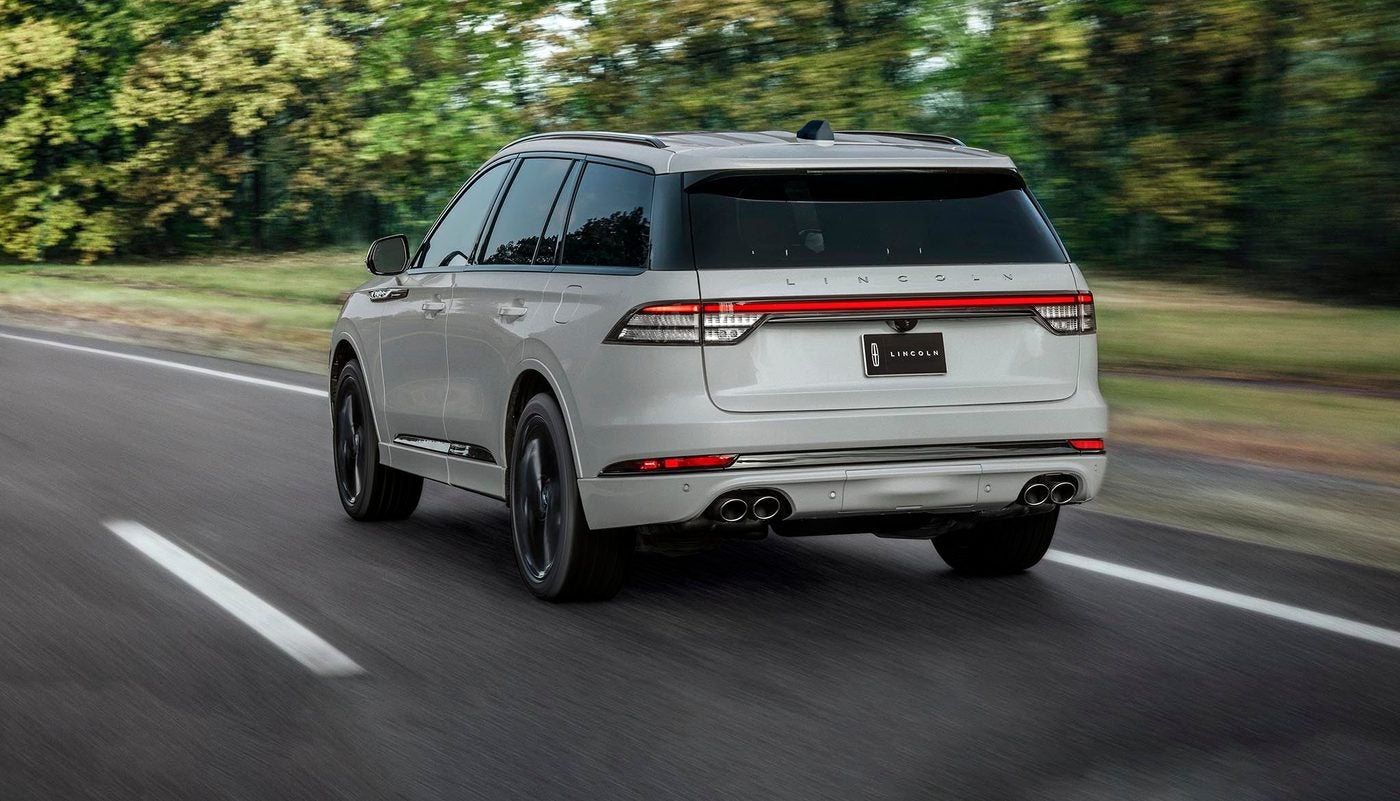
White Lincoln Aviator seen from behind driving on a country road

What Warranty Forever Means for Lincoln Owners in St. Louis

Ownership  |  St. Louis, MO What Warranty Forever covers on your Lincoln, what you have to do to keep it, and what it doesn't cover. Engine and transmission coverage for as long as you own the car, with no deductible and no mileage limit, sounds like something with a catch. So here are the terms as they're written on our Warranty Forever page, including the parts people tend to skip over. We checked every point below against that page before writing it. The agreement itself is what counts if a question ever comes up, so read it when you buy and keep a copy. Quick answer: Warranty Forever covers the engine, transmission, and drive axle parts listed in your agreement for as long as you own the vehicle. There's no deductible and no time or mileage limit. The catch is the maintenance: you have to keep up with it and keep records. It covers the powertrain only, and it doesn't transfer to the next owner. Covers Powertrain parts in your agreement Deductible None Lasts As long as you own the vehicle In this post What it covers Keeping it active Factory warranty Selling the vehicle Versus an extended warranty If something breaks What Does Warranty Forever Cover? Warranty Forever is powertrain coverage. That means the engine, transmission, and drive axle components listed in your agreement, with parts and labor covered at 100 percent and no deductible. Parts that aren't on the list aren't covered. Our Warranty Forever page also mentions timing components, turbo parts on turbocharged engines, and transfer case parts on four wheel drive models. Payment for a claim is limited to the average retail value of the vehicle at the time of the claim, so it isn't open ended. It isn't a bumper to bumper plan. Brakes, tires, wipers, and other wear items aren't part of it, and neither are towing or rental cars. What Keeps Warranty Forever Coverage Active? Maintenance is the part owners miss. You need to complete the customary maintenance listed in your agreement and keep records of all of it, including your VIN, a description of the vehicle, the service date, and the odometer reading. No owner oil changes Services have to be done by a licensed professional facility, with a detailed repair order. An oil change in your driveway doesn't count. Other shops need a phone call first If you use a shop other than a dealer, you have to call and get each scheduled service pre-authorized before the work is done. If your Lincoln has an oil life indicator, follow it. Just never go past the customary intervals in your agreement. How Does Warranty Forever Work Alongside the Factory Warranty? A new Lincoln comes with its own factory warranty for a set number of years or miles. Warranty Forever doesn't replace that. It picks up the powertrain after the factory coverage ends, as long as you've kept up with the maintenance. Because Warranty Forever is limited to the powertrain, things like electronics and other parts are handled under the factory warranty while it lasts, or by other coverage you may have. Our team can show you where one ends and the other begins. Warranty Forever Details Certified Pre-Owned Lincolns Does Warranty Forever Transfer If You Sell the Vehicle? No. The agreement can't be transferred to a new owner, so the coverage ends with you. If you're thinking about selling in a few years, plan on that. The agreement can't be transferred to a new owner. Records still help. A complete maintenance history is something any buyer or appraiser likes to see. If you're shopping for a used or Certified Pre-Owned Lincoln, ask our sales team what coverage comes with the exact vehicle. How Does This Compare to a Third-Party Extended Warranty? Warranty Forever comes with qualifying vehicles at no charge, has no deductible, and doesn't expire while you own the vehicle. A separately purchased extended service contract costs extra, and what it covers and how long it lasts depends on the contract. The tradeoff is scope. Warranty Forever covers the powertrain. Some extended contracts cover more, and ours says towing and rental cars may be covered by one of those. Neither is right for everyone, so compare the written terms side by side. What Should You Do If Something Breaks? Call the selling dealer first. They handle the claim, and the repair has to be authorized before the work starts, or it won't be covered. The program administrator pays covered repairs by credit card, so you aren't out of pocket. St. Louis driver tip Within 150 miles of the dealer that sold you the car, covered repairs are done at that dealer. Past 150 miles, you can use any licensed repair facility, but you still need prior authorization. Call before you hand over the keys, even on a road trip. Book it your way Schedule online, in the Lincoln app, or call us at 314-729-2700. Pickup and Delivery is complimentary for vehicles within the new vehicle limited warranty, so we can come get the car while you stay at work. See Pickup and Delivery Questions Owners Ask About Eligibility Is Warranty Forever available on every Lincoln? It comes with qualifying new and pre-owned vehicles sold by a participating dealer. Ask our sales team whether the exact vehicle you're looking at qualifies before you buy. How do I find out if my current Lincoln has Warranty Forever? Look through your purchase paperwork for the agreement. If you bought from us and can't find it, call with your VIN and we'll help you track it down. Does Warranty Forever cover a Lincoln that was bought somewhere else? Coverage comes from the dealer that sold the vehicle, so a car bought elsewhere isn't likely to have it. Check your own paperwork, and ask the seller if you're unsure. Questions Owners Ask About What's Covered Does Warranty Forever cover electrical or technology components? No. It's powertrain coverage. Electrical systems and tech features fall under your factory warranty while it lasts, or under other coverage you have. What is not covered under Warranty Forever? Parts that aren't on the covered list in your agreement, towing, rental cars, and repairs that weren't authorized first. Wear items like brakes, tires, and wiper blades aren't part of a powertrain plan. How is Warranty Forever different from an extended warranty bought separately? It comes with qualifying vehicles at no charge, has no deductible, and lasts as long as you own the vehicle. An extended contract costs extra and usually runs for a set term, though some cover more than the powertrain. Questions Owners Ask About Keeping Coverage Active What happens if I miss a scheduled maintenance appointment? Get it on the calendar as soon as you can. Your agreement sets the customary intervals and you can't go past them, so don't let it drift. If you're behind, call us and we'll talk through where you stand. Can I service my Lincoln somewhere other than the dealer? Yes, but with conditions. The work has to be done by a licensed professional facility with a detailed repair order, no oil changes in your own driveway, and you have to call and get each scheduled service pre-authorized first. What service records should I keep? Keep every repair order, and make sure each one shows your VIN, the vehicle description, the service date, and the odometer reading. A folder in the glove box or a photo on your phone works fine. Questions Owners Ask About Using Your Coverage Can I use Warranty Forever if I move out of the St. Louis area? Within 150 miles of the selling dealer, covered repairs are done at that dealer. Farther away, a licensed repair facility can do the work with prior authorization. Call before you move so you know the steps. Is there a deductible with Warranty Forever? No. Covered parts and labor are paid at 100 percent, up to the vehicle's average retail value at the time of the claim. What should I do first if something breaks and I think it's covered? Call the selling dealer before any repair is done. The repair has to be authorized first or it won't be covered. For covered repairs, the program administrator pays by credit card. Questions Owners Ask About Value and Next Steps Does Warranty Forever help when I sell or trade in my Lincoln? The agreement can't be transferred, so the next owner doesn't get it. A clean set of maintenance records still helps with a buyer or an appraiser. How often does the recommended maintenance schedule call for service? The customary intervals are in your Warranty Forever agreement, and the Maintenance Schedule in your owner's guide covers the rest. If the two seem to disagree, ask our service team before you decide. Who do I contact with a question about my coverage? Call us at 314-729-2700 or use the contact page on our website. Have your VIN and your agreement handy and we can answer faster. Have Questions About Your Coverage? Our team can go over your Warranty Forever agreement with you. Contact Our Team Due for Scheduled Maintenance? Keep your records in order with a service visit. Schedule Service

Woman driving a Lincoln Nautilus with the wide digital display and a sunny hillside road ahead

Warning Signs Your Lincoln's Battery Needs Attention This Summer

Service  |  St. Louis, MO Why a St. Louis summer wears out a Lincoln battery, what the warning signs look like, and what a battery test involves. Most people blame cold mornings for a dead battery. Summer heat does the damage, and winter just exposes it. A battery that limped through last winter can quit in a hot St. Louis August, usually in a parking lot instead of your driveway. Heat speeds up the chemistry inside a battery. It evaporates fluid and corrodes the internal parts faster. After a few summers of that, especially parked in direct sun around Chesterfield or Manchester, a battery can reach the end of its life sooner than it would in a milder climate. Quick answer: Slow cranking, dashboard warning lights, dim headlights, a swollen battery case, or a battery older than three to five years are all reasons to have it tested before it fails. Heat wears a battery down more than cold does, so one that seemed fine all winter can still be close to done by late summer. Typical life Three to five years Main culprit Summer heat Smart move Test before it fails In this post Summer versus winter Warning signs How long it lasts Alternator or battery The battery test Extending battery life Why Is Summer Harder on a Battery Than Winter? Cold weather reveals a weak battery because low temperatures cut the current it can deliver. That's why so many failures happen on cold mornings. Heat is what causes the weakness in the first place. High under hood temperatures break down internal parts and evaporate electrolyte faster than a cooler climate would. One humid St. Louis summer stresses a battery more than a mild spring or fall does over several months. That's why a battery test in August often finds what wasn't obvious in April. What Are the Warning Signs Before a Battery Fails Completely? A battery rarely fails with zero warning, even though it can feel sudden when it happens. Watch for these before you need a jump in a parking lot. Slow cranking The engine turns over slower than usual before it starts. Dash warning light A battery warning light comes on. Dim lights Headlights or interior lights look dimmer than normal, especially at idle. Swollen case The battery case looks bloated or misshapen. Rotten egg smell You notice it near the engine bay. Corrosion Powdery buildup around the terminals. Any one of these is worth a quick check. A couple together are a strong signal to get a battery test done soon, not at your next scheduled visit. How Long Should a Car Battery Last? Most batteries are rated for three to five years, though climate, driving habits, and how the vehicle is used all matter. Short trips, extreme heat, and long stretches sitting unused all shorten that. Not sure how old yours is? Our service team can read the manufacture date stamped on the case. A battery near or past four years is worth testing even if it still starts the vehicle, since heat damage can end it with little warning. Battery Service Advice Schedule a Battery Test Can a Weak Alternator Look Like a Battery Problem? Yes, and it's one of the more common mix-ups our service advisors talk through. A battery stores power, and the alternator recharges it while the engine runs. If the alternator isn't charging properly, even a healthy battery slowly loses power and won't start the vehicle. That looks just like a worn out battery. A proper diagnostic tests the battery and the charging system together. Replace a battery without checking the alternator and the same symptoms can come right back. That's why a real test beats swapping in a parts store battery on a guess. A battery that limped through last winter can fail without warning in the middle of a hot St. Louis August. What Happens During a Battery Test? The test is quick, and you get a clear answer about whether the battery is holding up. The technician looks at three things. 1 Load test This measures how well the battery holds and delivers power under simulated demand, which tells you more than a voltage check alone. 2 Terminals and cables The technician looks for corrosion and makes sure the battery is secure. 3 Charging system Output is checked while the engine runs, so a weak alternator doesn't get blamed on a good battery. If a replacement is recommended, we'll go over the right specification for your Lincoln model. We won't default to a generic one. Is There a Way to Extend a Battery's Life in Summer Heat? Park in the shade or a garage when you can. Less heat means less wear. Keep the terminals clean too, since a weak connection makes the battery and alternator work harder. St. Louis driver tip A second vehicle that sits for weeks in August heat tends to lose charge faster. Drive it for a while every week or two so the alternator can keep the battery topped off. Book it your way Schedule online, in the Lincoln app, or call us at 314-729-2700. Pickup and Delivery is complimentary for vehicles within the new vehicle limited warranty, so we can come get the car while you stay at work. See Pickup and Delivery Questions Owners Ask About Diagnosing Battery Problems How do I know if it's the battery or the alternator? A vehicle that struggles to start but runs fine once going often points to the battery. One that starts fine but stalls, dims its lights while driving, or shows a charging warning is more likely an alternator issue. A combined test is the most reliable way to know. Can extreme heat damage a battery even if it still starts the car? Yes. Heat damage builds slowly inside the battery while it keeps starting the vehicle just fine. That's how a battery can work every day and then fail suddenly once the internal wear crosses a line. Can cold weather also affect a battery that was already weakened by heat? Yes. A battery that lost capacity over a hot summer often shows it once cold weather arrives, since low temperatures cut the current a weakened battery can still deliver. That's why one that seemed fine in fall can fail on a cold morning. Questions Owners Ask About Battery Testing and Service Should I test my battery even if it seems to be working fine? If your battery is more than three years old, a quick test during a regular service visit is a smart precaution, especially going into or coming out of a Missouri summer. It can catch a weak battery before it leaves you stranded. How long does a battery replacement take? It depends on the vehicle and the day. Ask your advisor for an estimate when you book. If the new battery needs to be registered with the vehicle's computer, our technicians handle that during the same visit. What type of battery does a Lincoln need? The correct group size and specification depend on your Lincoln's model, engine, and equipment. Our service team looks up the exact specification for your vehicle instead of assuming a generic battery will fit or perform right. Questions Owners Ask About Jump Starts and Setup Is it safe to jump start a Lincoln with an internal battery issue? A jump start can get the vehicle running for now, but it doesn't fix a battery problem. If a battery needs a jump more than once, it should be tested and probably replaced, not jumped again and called fixed. Does a new battery need any special setup on a modern Lincoln? Some newer vehicles need the onboard computer to be registered to a new battery so charging is managed correctly. Our technicians handle this as part of a proper installation, which is one more reason to have the work done by a team that knows your model. Can I replace a Lincoln battery myself? The battery can be swapped by hand, but many modern vehicles expect the new battery to be registered with the electrical system afterward. Skip that step and charging can be affected, so it's smart to have a service team do the work. Questions Owners Ask About Everyday Battery Care Do short trips shorten battery life? They can. Starting the engine takes a lot of energy, and a brief trip may not give the alternator time to replace it. A longer drive now and then helps, and a battery test will show how much reserve is left. How do I know if battery terminals are corroded? Corrosion usually looks like a white, blue, or green powdery buildup around the terminals. A visual check is quick, and heavy buildup is worth having cleaned and tested, since it can cause hard starts that look like a failing battery. Is it normal for a battery to drain faster in a vehicle that sits unused? Yes. A vehicle that sits for long stretches loses a little charge even while parked, and modern vehicles with more onboard electronics tend to draw a bit more than older ones. Driving every week or two keeps the battery charged. Questions Owners Ask About Ownership and Troubleshooting Does the Lincoln app show battery health information? The Lincoln app can show vehicle health alerts, but for a real battery health answer you need an in person test at our service department. Don't rely on the app alone. What happens to my settings if the battery is disconnected? Some settings and learned values can reset when power is interrupted, and a few systems may need to relearn afterward. A service team that does battery work regularly knows which steps apply to your model. What should I do if my Lincoln won't start and I'm away from home? Start with the basics, like the key fob battery and a firm connection at the dash, then check your owner's guide before you try a jump start. If it still won't start, roadside assistance or a call to our service department can help you pick the safest next step. Not Sure How Old Your Battery Is? A quick test can tell you before it becomes a problem. Visit Our Service Department Prefer We Come to You? Lincoln Mobile Service lists batteries among what it can do at your location. Explore Mobile Service Keep reading: Heat hits more than the battery. Read the signs your Lincoln needs AC service.

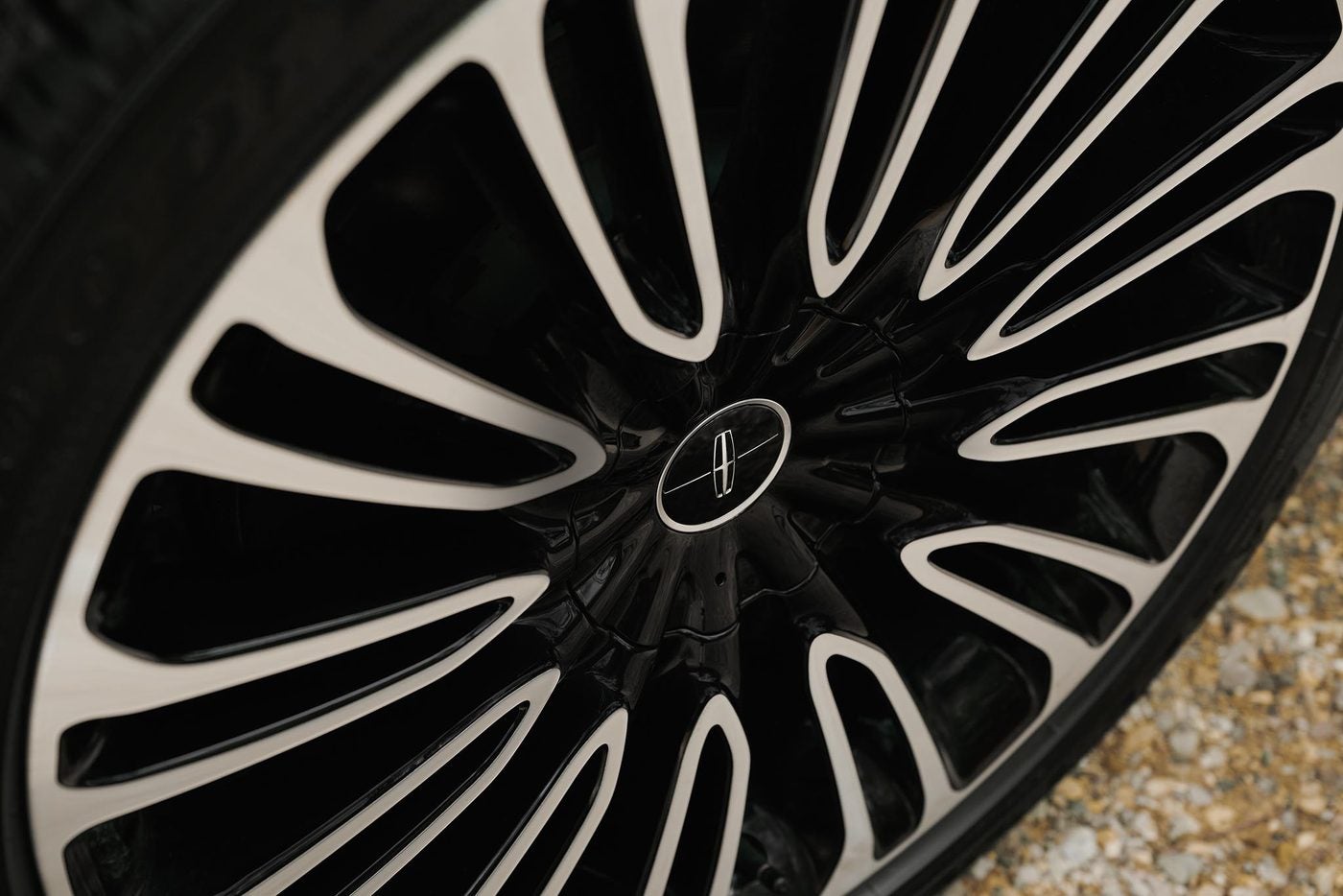
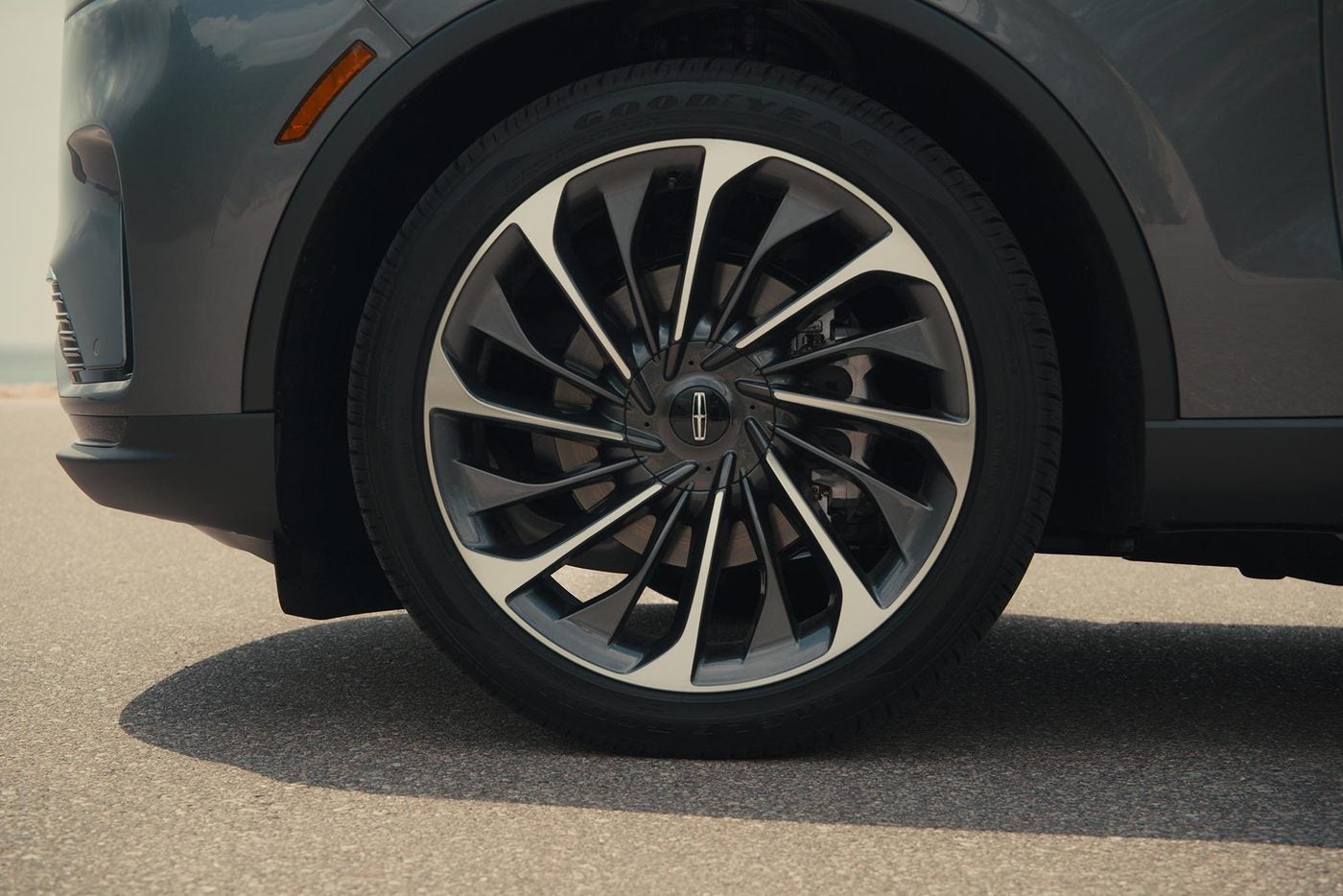
Close view of a black and chrome multi spoke wheel on a Lincoln Aviator Black Label

Signs You Need New Tires Before Your Next Road Trip

Service  |  St. Louis, MO The signs your tires need attention before a summer road trip, and how to check them yourself in your driveway. Summer is when a Lincoln SUV earns its keep. A weekend at Lake of the Ozarks, a drive out to Hermann, a long run up I-70 toward Columbia or Kansas City. Tires that felt fine on the commute through Kirkwood or Chesterfield can act very differently with the luggage in and a few hours at highway speed. Most tire trouble gives you a warning first: a vibration you got used to, tread wearing unevenly, or a slow leak that needs air every couple of weeks. Those are easy to shrug off until you're on the shoulder of the interstate with a flat. Quick answer: Uneven wear, tread under 4/32 of an inch, cracks in the sidewall, a vibration at highway speed, or a tire that keeps losing air are all reasons to get your tires inspected before a road trip. Most of it takes a few minutes to check and it's far easier to handle at home than on the side of the road. Road trip tread 4/32 of an inch or more Legal minimum 2/32 in most states Tire age Check the date code In this post Tread depth Uneven wear Highway vibration Sidewall damage Tire age Rotation and pressure How Do You Know If Your Tread Is Too Worn? Two coins will tell you most of what you need to know. Do both before a trip. 1 The penny test Put a penny in the tread groove with Lincoln's head pointing down. If you can see all of his head, the tread is down to about 2/32 of an inch. That's the legal minimum in most states, and well past the point where a tire grips the wet. 2 The quarter test For a road trip, aim for 4/32 or more. Put a quarter in the groove with Washington's head down. If tread covers part of his head, you still have a decent margin. Wet braking distance grows noticeably below 4/32, which is why we use that number for a trip and not the legal minimum. What Does Uneven Wear Mean? Uneven wear tells you something about the vehicle, not just the tire. Wear on the outer edges often points to underinflation, and wear down the middle to overinflation. Heavier wear on one side can mean an alignment that has drifted, sometimes from a single pothole on Manchester Road. Cupping or scalloped patches, often a sign of worn suspension parts Feathering, where tread edges are sharp on one side and rounded on the other, usually an alignment issue Heavier wear on the inside or outside edge, also usually alignment Flat spots or bald patches from a wheel that's out of balance A tire can look new on the surface and still hide one of these patterns. A hands on inspection catches what a quick glance from the driveway won't. Why Does a Vibration at Highway Speed Matter? A vibration that shows up around 55 miles per hour and up usually points to a wheel that's out of balance, or a tire with a problem inside. Over a couple of hours on I-44 it puts real stress on the suspension and steering. If it comes and goes, or gets worse after a bump, get it checked before the trip and not during it. Balancing a wheel is usually a quick job. Tire Care Advice Schedule a Tire Inspection What About Sidewall Cracks and Bulges? Cracking along the sidewall, sometimes called dry rot, tends to show up on older tires even when the tread looks fine. Missouri summers are hard on rubber, and repeated heat and UV can crack a tire before the tread wears out. A bulge or bubble in the sidewall The tire's internal structure has been damaged, often by a pothole or a curb. It can fail without warning under a loaded vehicle at highway speed. Replace it before any longer drive. A tire can look new on the surface and still hide one of these patterns. Does Tire Age Matter Even If the Tread Looks Fine? Yes. Most manufacturers recommend replacing tires six to ten years after they were made, no matter how much tread is left, because the rubber breaks down over time. That matters for a second vehicle, or for a Lincoln that sits for long stretches in a garage in Frontenac or Ladue. The date is stamped on the sidewall as a four digit code, two digits for the week and two for the year. Our service team can read it for you during any visit. Should Tires Be Rotated Before a Long Trip? A rotation helps all four tires wear evenly, which stretches the life of the set. If it's been more than 5,000 to 7,000 miles since your last one, book it before the trip. St. Louis driver tip Set your pressure to the number on the sticker inside the driver's door, not the number printed on the tire. The tire's number is the maximum, not the recommendation. Underinflated tires run hotter at highway speed, and heat is a common cause of tire failure. Book it your way Schedule online, in the Lincoln app, or call us at 314-729-2700. Pickup and Delivery is complimentary for vehicles within the new vehicle limited warranty, so we can come get the car while you stay at work. See Pickup and Delivery Questions Drivers Ask About Tire Wear and Replacement How often should tires be replaced? Most tires last somewhere between 40,000 and 60,000 miles, depending on the tire, how you drive, and how well they're rotated and maintained. Tread depth and age both matter, so a tire can need replacing sooner if it shows uneven wear or cracking. Can I mix new and used tires on the same vehicle? It's not recommended for most vehicles, especially all wheel drive Lincoln SUVs, since a gap in tread depth can affect handling and put uneven strain on the drivetrain. If only two tires need replacing, the newer pair usually goes on the rear axle. What does the wear bar on a tire indicate? The wear bar is a raised strip molded into the tread groove. It sits flush with the surrounding tread once depth drops to about 2/32 of an inch. If the tread is level with it across a good part of the tire, replacement should happen soon. Questions Drivers Ask About Tire Pressure What tire pressure should I use for a loaded road trip? Use the pressure on the sticker inside the driver's door jamb. Some owners add a few pounds when the vehicle is heavily loaded, which can be fine, but check the right adjustment for your Lincoln with our service team. How often should tire pressure be checked? Once a month is a good habit, plus a check before any longer trip. Pressure drops with temperature swings, so a tire that was fine in warm weather can read low once it cools off. What does the tire pressure warning light mean? It comes on when one or more tires has dropped well below the recommended pressure. Check all four with a gauge as soon as it's safe and add air to the door jamb number. If the light stays on, a sensor may need attention, and our service team can check it. Questions Drivers Ask About Tire Service How long does a tire inspection take? A basic visual check and pressure check is quick. If a rotation or balance is needed, plan for more time. Ask your advisor for an estimate when you book, so you can fit it in before a weekend trip. Is a spare tire or repair kit enough for a road trip? A properly inflated spare or a working repair kit is useful, but neither replaces four tires in good shape. A spare is meant to get you to the nearest service location, not to be driven far at highway speed. Can a tire be repaired instead of replaced? A puncture in the tread area, away from the sidewall, can often be repaired with a proper plug and patch. A sidewall puncture, a repeat puncture in the same spot, or damage near the edge of the tread usually means replacement. Questions Drivers Ask About New Tires and Setup What size tires does my Lincoln use? The size is printed on the sticker inside the driver's door jamb and in the owner's guide, and the same code is molded into the tire sidewall. Match the size and load rating for your specific vehicle, not whatever the last set happened to be. Do new tires need to be balanced? Balancing is a standard part of mounting new tires, since even a small weight difference around the wheel can cause a vibration at highway speed. It's a quick step that protects ride comfort and tire life. Should I get an alignment when I buy new tires? An alignment check is a smart companion to new tires, since a drifted alignment can wear a fresh set unevenly in a short time. If your old tires wore on one edge, checking alignment at the same visit is even more useful. Questions Drivers Ask About Seasonal Tire Care Does St. Louis weather affect how long tires last? Yes. Summer heat ages rubber faster, and winter road treatments and temperature swings add their own wear. If you drive year round in the St. Louis area, a tire check twice a year makes sense, once before summer and once before winter. Should all season tires be swapped for winter tires in St. Louis? Most St. Louis drivers do fine year round on a quality all season tire, since our winters are milder than up north. If you regularly drive in snow or ice, or want extra margin on the coldest days, dedicated winter tires are worth a look. Why does my tire pressure drop when the weather gets colder? Air contracts as temperatures fall, and tire pressure drops roughly one pound per square inch for every ten degree drop. That's why a tire that read fine in October can set off a warning on the first cold morning of the season. Planning a Road Trip Soon? Have your tires inspected before you load up and go. Visit Our Service Department Need New Tires? Check current service and parts offers before you book. View Service Specials Keep reading: If your AC has felt weak lately, read signs your Lincoln needs AC service before a St. Louis summer.

2026 Lincoln Navigator For Sale - St. Louis, MO

Signs Your Lincoln Needs AC Service Before a St. Louis Summer

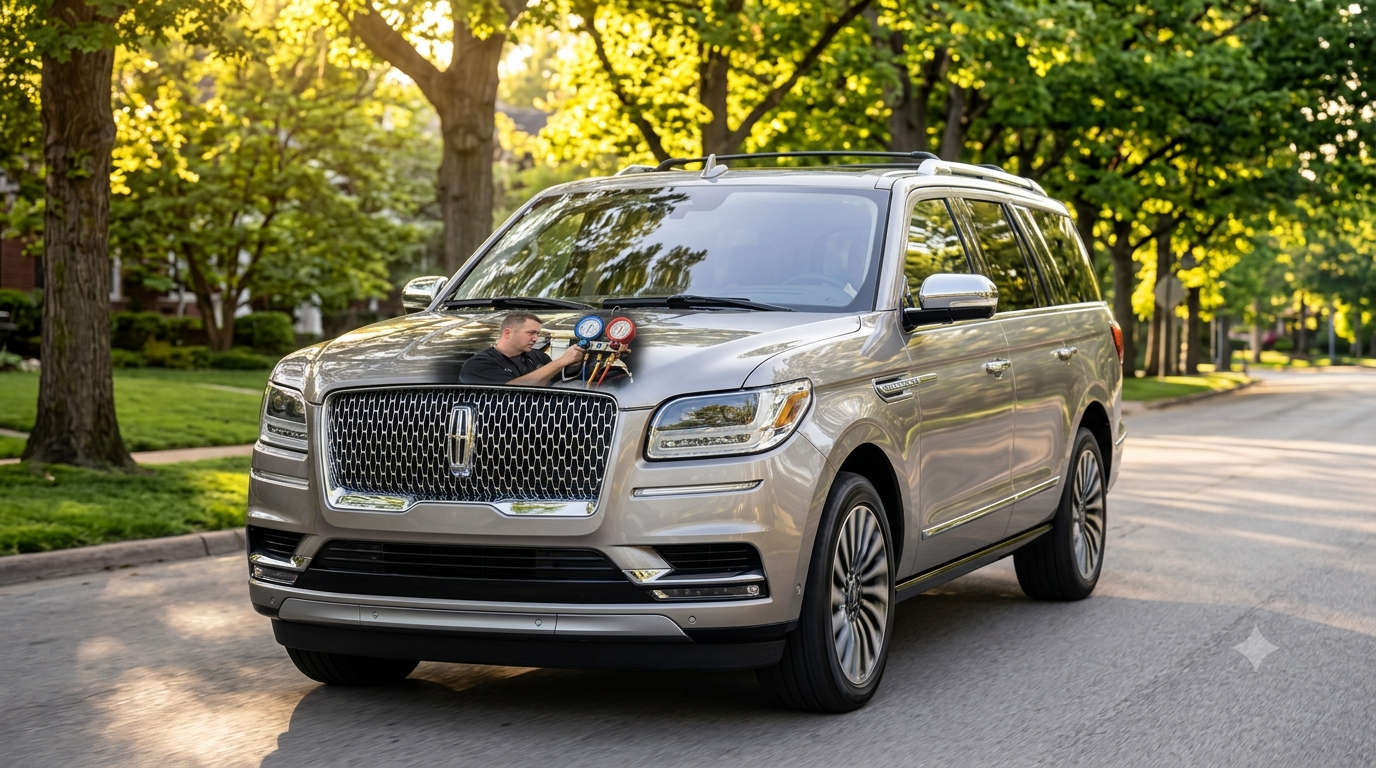
Signs Your Lincoln Needs AC Service Before a St. Louis Summer A St. Louis summer does not ease into itself. One week the mornings are still cool enough for a light jacket, and the next you are sitting in traffic on I-64 with the sun coming through the windshield and the cabin holding heat like a greenhouse. That is exactly when a Lincoln owner discovers whether the air conditioning system is actually ready for the season, and it is rarely a convenient time to find out. Weak airflow, air that never quite gets cold, or a compressor that cycles strangely are not problems that fix themselves once the temperature climbs. They tend to get worse, and a system that is already struggling in May can leave you with no cold air at all by August. At Dave Sinclair Lincoln St. Louis, our service team sees a predictable pattern every year: a handful of small warning signs in late spring, then a wave of no-cool-air appointments once the heat sets in for good. Quick answer: Warm or weak airflow, a musty smell when the AC first kicks on, unusual cycling noises, or fogged-up windows on a humid morning all point to an AC system that needs attention. Most of these issues are more affordable to diagnose in early summer than after a full failure, so scheduling a service visit at the first sign of trouble is the better move. Why Does St. Louis Heat Put So Much Strain on a Vehicle's AC System? Humidity is the difference. A dry heat asks less of an AC compressor than the thick, moisture-heavy air that settles over the St. Louis region from June through September. The system is not just cooling the cabin, it is also pulling moisture out of the air, and that added workload shows any weakness in the refrigerant charge, the compressor, or the cabin air filter almost immediately. Vehicles that sit in direct sun in a driveway in Chesterfield or a parking garage in Clayton face an even tougher test. Interior temperatures inside a parked car can climb well past 120 degrees on a sunny St. Louis afternoon, and an AC system that is even slightly undercharged will struggle to bring that cabin back down to a comfortable temperature on the drive home. What Are the Early Warning Signs of AC Trouble? Most Lincoln owners notice one of a few patterns before a full breakdown. Catching any of these early is what keeps a simple service visit from turning into a bigger repair. Air that blows but never gets truly cold, even on the highest fan setting Airflow that feels weaker than it used to, especially at lower fan speeds A musty or sour smell in the first few seconds after the AC turns on A clicking or cycling sound from the compressor that was not there before Windows that fog up more than expected on a humid morning Cold air on one side of the cabin and warmer air on the other Is It the Refrigerant, the Compressor, or Something Else? Refrigerant level is the most common culprit behind weak cooling, and it usually points to a small leak somewhere in the system rather than the refrigerant simply running low on its own. A properly sealed AC system should not need a recharge every year, so if your Lincoln needed one last summer and is already blowing warm again, tell your service advisor about that repeat pattern when you schedule the visit. A failing compressor tends to announce itself with noise before it fails completely, often a clicking, grinding, or clutch-engagement sound when the AC cycles on. A clogged cabin air filter is the simplest fix on this list and one of the most overlooked, since a filter packed with pollen and road debris can choke off airflow enough to make a perfectly healthy AC system feel weak. Schedule Service Learn About Mobile Service How Often Should a Lincoln's AC System Be Checked? A quick AC performance check is worth adding to a routine service visit once a year, ideally before the first real heat wave hits the St. Louis area. This is a simple inspection, not a full teardown, and it usually catches a slow refrigerant leak or a weakening compressor while the fix is still straightforward. If your Lincoln is under warranty or covered by Warranty Forever, an AC concern is exactly the kind of issue worth bringing in sooner rather than later, since catching it early can mean the difference between a covered repair and a larger out-of-pocket expense once a component fails outright. A system that is even slightly undercharged will struggle to bring that cabin back down to a comfortable temperature on the drive home. What Should You Expect During an AC Service Appointment? A typical AC diagnostic starts with a pressure check on the refrigerant system, followed by a visual inspection for signs of a leak around hoses, seals, and the compressor itself. Our technicians will also check the cabin air filter and confirm the blend door and fan are operating correctly, since a weak-feeling AC is not always a refrigerant problem. If a leak is found, you will get a clear explanation of where it is and what the repair involves before any work begins. Not every AC issue requires a full recharge or compressor replacement, and our team will walk you through the actual scope of the fix rather than defaulting to the most expensive option. For owners in Kirkwood, Frontenac, or Brentwood who cannot easily carve out a morning for a service visit, Lincoln Mobile Service can often handle a diagnostic and lighter repairs right at your home or office, which keeps a summer AC issue from disrupting your whole day. Can Regular Maintenance Prevent AC Problems Before They Start? Yes, in most cases. A cabin air filter replaced on schedule, a system that gets its annual performance check, and small leaks caught before they drain the refrigerant charge completely all add up to an AC system that holds up through a full St. Louis summer without a surprise breakdown in July. Our Basic Maintenance Plan and Premium Maintenance Plan both build routine checks like this into a predictable schedule, so an AC concern gets caught during a normal visit rather than showing up as an emergency on the hottest day of the year. Questions Owners Ask About Lincoln AC Service How much does it cost to service a Lincoln's AC system? Cost depends entirely on what the diagnostic finds. A cabin air filter replacement is a minor expense, while a refrigerant leak repair or compressor replacement involves more parts and labor. Our service advisors provide a clear estimate after the diagnostic, before any repair work begins. Why does my Lincoln's AC work fine in the morning but get weaker in the afternoon? This pattern often points to a refrigerant level that is on the low side. Cooler morning temperatures ask less of the system, while the heat and humidity of a St. Louis afternoon push it closer to its limit, exposing a shortfall that was not obvious earlier in the day. Is it normal for a car AC to need a recharge every year? No. A properly sealed AC system should hold its refrigerant charge for years. Needing a recharge annually usually means there is a small leak somewhere in the system that should be located and repaired rather than simply topped off again. Can a bad AC compressor damage other parts of the vehicle? A compressor that fails completely can send metal debris through the AC lines, which may require flushing the entire system during repair. That is one of the main reasons to address a noisy or struggling compressor before it fails outright rather than waiting until the AC stops working altogether. Does a musty smell from the AC mean something is wrong? Usually it means moisture has built up in the evaporator core or the cabin air filter needs to be replaced. It is a common and fixable issue, and flagging it at your next service visit helps since it can affect air quality inside the cabin over time. Should I wait until the AC completely stops working to schedule service? Waiting rarely saves money. A slow leak or a struggling compressor tends to get worse with continued use, and a full failure in the middle of summer often costs more to repair and leaves you without cool air until the appointment is complete. Notice a Change in Your AC? Get it checked before the next heat wave settles over St. Louis. Visit Our Service Department Prefer Service at Home? Lincoln Mobile Service can come to you in Ballwin, Chesterfield, and surrounding areas. Explore Mobile Service

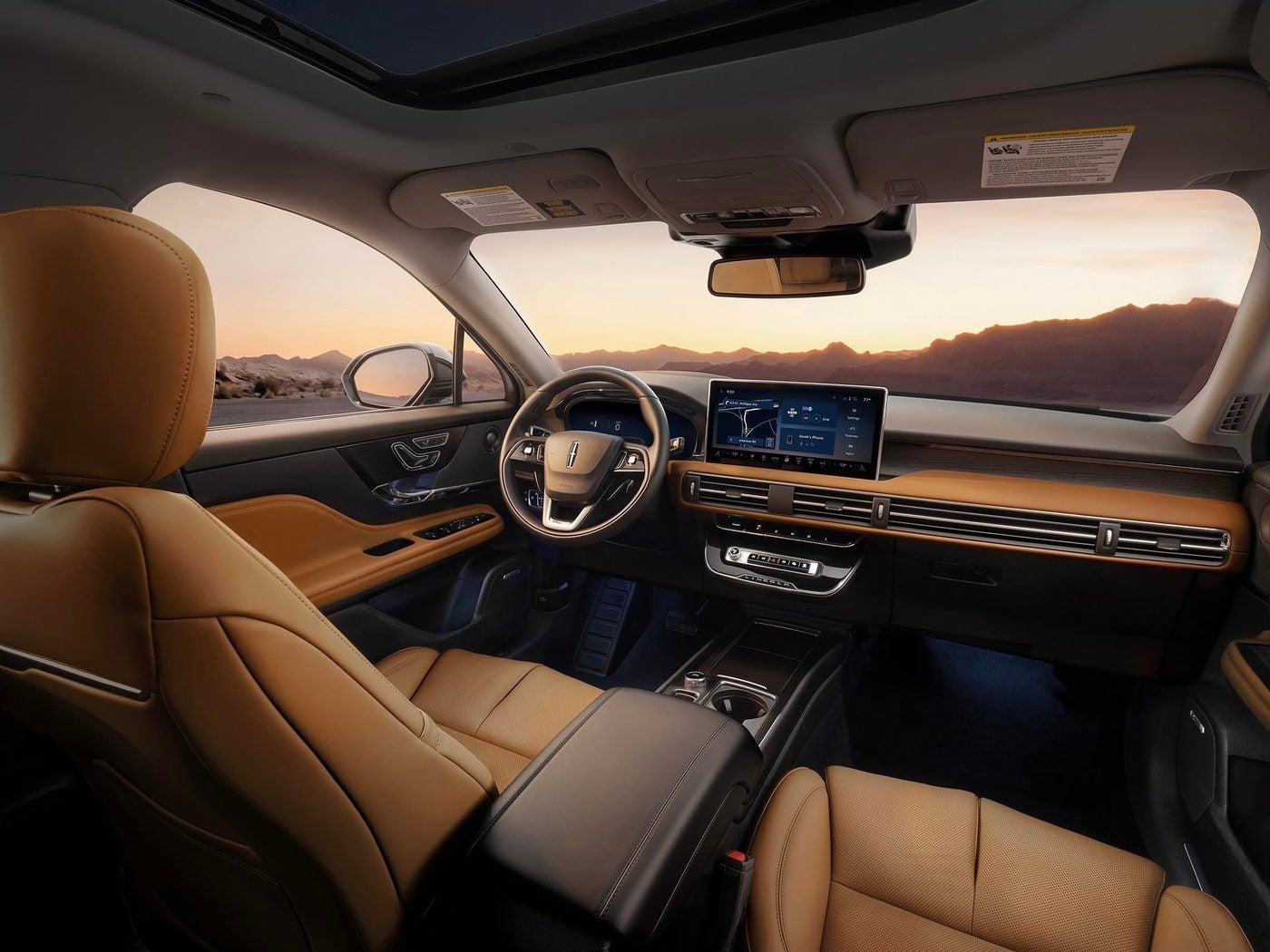
Tan leather front seats, steering wheel and digital display inside a Lincoln Corsair

Check Engine Light Near Me: What a Lincoln Dashboard Warning Means

Service  |  St. Louis, MO What your Lincoln's check engine light is telling you, when to keep driving, and when to pull over. The light comes on during the drive home on I-64, or while you're sitting in traffic on Manchester Road, and the first thought is usually the worst one. Sometimes the cause is minor. Sometimes it isn't. The light can't tell you which, so it helps to know what to do next. If you've been searching "check engine light near me," this covers steady versus flashing, the usual causes, what a diagnostic scan does, and how to get your Lincoln checked. Quick answer: A steady check engine light means the vehicle stored a fault and should be checked soon. A flashing light is more urgent: ease off, avoid hard acceleration, and get it looked at as soon as you safely can. A diagnostic scan reads the stored code, and a technician uses it as a starting point to find the cause. Steady light Get it checked soon Flashing light Ease off, get help now Gas cap Tighten until it clicks In this post What it means Steady or flashing Common causes The scan Safe to drive? What to tell the advisor What Does the Check Engine Light Mean on a Lincoln? The light is part of the vehicle's onboard monitoring. When a system that affects engine performance or emissions reports a reading outside its normal range, the vehicle stores a trouble code and turns the light on. It doesn't name the problem. It tells you something was detected, and a technician with the right tools still has to find the cause. Is a Steady Light Different From a Flashing One? Yes, and the difference matters. A steady light usually means a fault was logged, and the vehicle can generally be driven carefully while you arrange service. Don't ignore it for weeks, though. Flashing light The vehicle is asking for attention now. It can point to a condition that may harm parts of the exhaust system if you keep driving hard. Ease off the accelerator, avoid towing or heavy loads, and get it checked as soon as you safely can. Rough running or lost power Pull over somewhere safe and call for help. What Commonly Turns the Light On? The list of possible causes is long. A short version shows the range from simple to more involved: A loose, damaged, or missing gas cap A sensor reading incorrectly, such as one that watches exhaust or airflow An emissions component that's wearing out Ignition parts like spark plugs or coils that are misfiring Other engine or transmission faults St. Louis driver tip If the light came on right after you filled up, check the gas cap first. Tighten it until it clicks and drive normally for a bit. If the light stays on, have the vehicle scanned. What Does a Diagnostic Scan Tell You? A technician connects a scan tool to your Lincoln and reads the stored trouble codes. The code points to the system or circuit where the problem was detected, which narrows the search. A code is a starting point, not a verdict. The same code can come from more than one cause, so the technician follows up with more testing before recommending a repair. That extra step keeps you from paying to replace a part that wasn't the problem. A code is a starting point, not a verdict. Schedule Lincoln Service View Service Specials Is It Safe to Keep Driving With the Light On? With a steady light and a vehicle that drives normally, short trips to get it checked are generally reasonable. Don't let it sit for weeks, because a small issue can grow while the light stays on. With a flashing light, a rough running engine, a burning smell, or a noticeable loss of power, stop driving as soon as it's safe and have the vehicle looked at. When in doubt, call our service team and tell us what you see. What Should You Tell the Service Advisor? Details help the technician. Tell the advisor when the light first came on, whether it's steady or flashing, and whether anything changed around then, like fueling, a long trip, bad weather, or a rough start. Mention how the vehicle feels too: hesitation, odd noises, poor fuel economy, or other warning lights. You can schedule through our website or call the service department. Plenty of our customers come in from Kirkwood, Creve Coeur, and Manchester. Book it your way Schedule online, in the Lincoln app, or call us at 314-729-2700. Pickup and Delivery is complimentary for vehicles within the new vehicle limited warranty, so we can come get the car while you stay at work. See Pickup and Delivery Questions Drivers Ask About the Warning Light What does a steady check engine light mean? It means the vehicle detected a fault and stored a code. The cause could be small or significant, so schedule a diagnostic soon instead of waiting for it to clear. Why is my check engine light flashing? A flashing light signals something more urgent than a steady one, often related to engine performance. Ease off, avoid heavy loads, and have the vehicle checked as soon as you safely can. Can the check engine light turn off on its own? Sometimes it does, for example after a loose gas cap is tightened and the vehicle completes its checks. The stored code may stay on record, so a technician can still tell you what triggered it. Questions Drivers Ask About Common Causes Can a loose gas cap turn on the check engine light? It can, because the fuel system is monitored for leaks. Tighten the cap until it clicks and give the vehicle some normal driving. If the light stays on, get it scanned. Do worn spark plugs or ignition coils trigger the light? They can. A misfire from worn ignition parts is a common reason for a warning, and it may come with rough running or hesitation. A technician can confirm which part is responsible. Can an oxygen sensor or emissions part cause the light? Yes. Sensors and emissions components are monitored closely, and a failing one can set a code. Swapping parts on a guess wastes time and money, so let testing confirm the cause first. Questions Drivers Ask About Diagnostics What does a car diagnostic scan include? A technician reads the stored codes with a scan tool, reviews related data, and then inspects or tests the system the code points to. The goal is to find the cause, not just the code. Is a free code read the same as a full diagnosis? No. A basic code read tells you what was stored. A full diagnosis goes further to find out why, and that's what lets a repair be recommended with confidence. Should I clear the code myself? Clearing a code erases information a technician can use, and it doesn't fix the cause, so the light will probably come back. Have the vehicle scanned before anything is cleared. Questions Drivers Ask About Driving and Safety How long can I drive with the check engine light on? With a steady light and normal driving, plan to schedule service promptly, within days instead of weeks. A flashing light or a rough running engine calls for much quicker action. Will the light affect an emissions inspection? An active warning light can be a problem at inspection time, since the system is tied to emissions monitoring. Check current requirements for your area, and get the issue diagnosed before your test date. Does every warning light mean a major repair? Not at all. Many causes are simple and some are minor. The point of a diagnostic is to learn which situation you have so you can make an informed decision. Questions Drivers Ask About Scheduling Service How do I schedule a diagnostic at Dave Sinclair Lincoln St. Louis? Use the service scheduling page on our website or call the service department at 314-729-2700. Describe the light and how the vehicle is driving so we can plan the visit and have a technician ready. Can the service team check other dashboard warnings too? Our technicians can look at other warning lights during the same visit. Tell us about every light you've seen, and roughly when it showed up, so nothing gets missed. What if my check engine light comes and goes? An intermittent light still means a fault was detected at some point. Note when it appears, like cold starts or rain, and share that with the advisor to help track it down. Ready for Answers? Have a technician look into the warning light. Visit Our Service Department Dashboard Lights and Battery? A weak battery can cause other electrical warnings. Battery Service Keep reading: Warm weather on the way? Read the signs your Lincoln needs AC service.

Lincoln BlueCruise Advantages - St. Louis, MO

The Advantages Of Lincoln BlueCruise

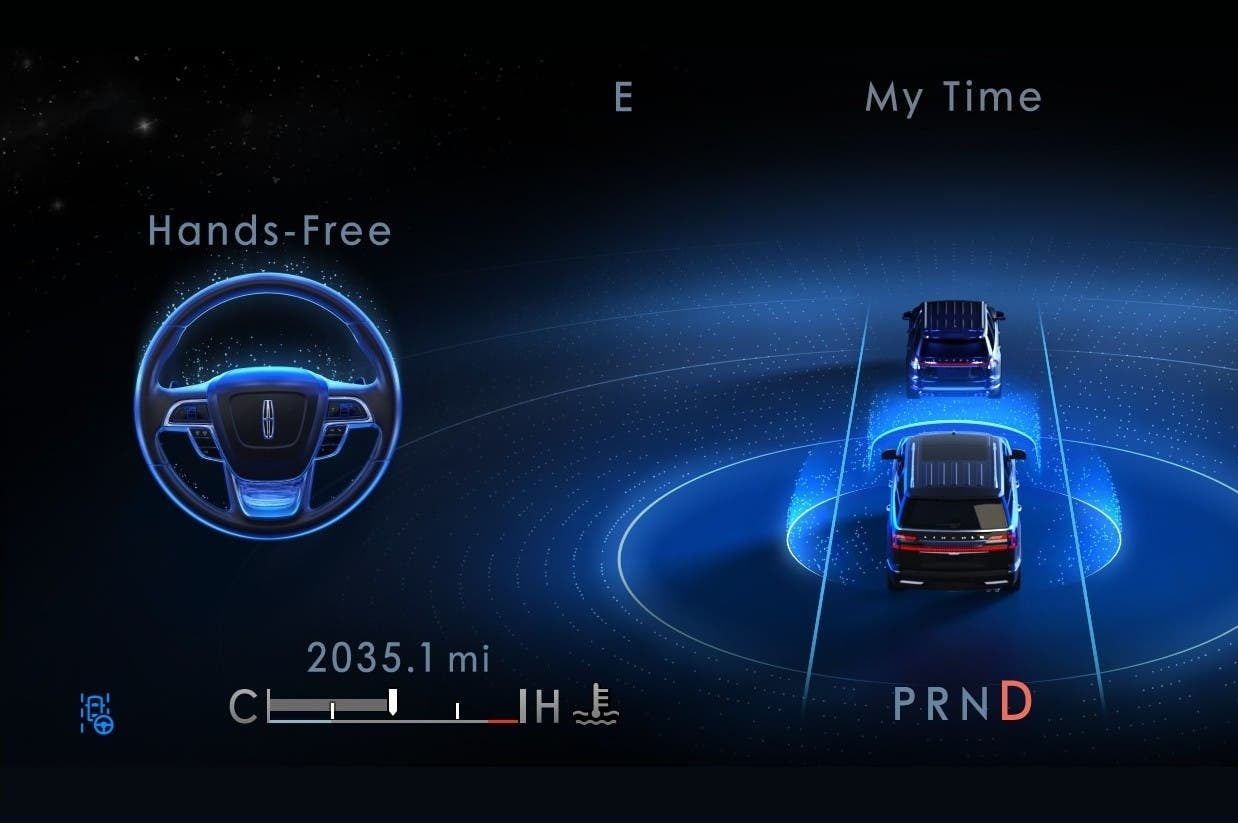
How Lincoln BlueCruise Changes Everyday Driving Driving around St. Louis can change quickly. One minute you are moving comfortably along I-64 near Frontenac, and the next you are slowing down near I-270, watching traffic tighten around you as everyone heads toward Clayton, Chesterfield, downtown St. Louis or Lambert International Airport. For many local drivers, the daily routine is not one long road trip. It is a series of short, busy, attention-heavy drives that can wear you down over time. That is where Lincoln BlueCruise becomes more than just another technology feature. It is not about turning your Lincoln into a self-driving vehicle. It is about making the parts of driving that feel the most repetitive, tiring and demanding feel more controlled and more comfortable. For St. Louis drivers who spend time on I-64, I-44, I-55, I-70 or I-270, Lincoln BlueCruise can add hands-free highway driving assistance on compatible mapped highways, helping your Lincoln manage steering, braking and acceleration while you keep your eyes on the road. The result is a driving experience that feels more relaxed without removing the driver from the responsibility of driving. At Dave Sinclair Lincoln St. Louis, this is one of the Lincoln technologies we believe luxury shoppers should understand before they choose their next SUV. Lincoln BlueCruise fits the brand because it is not loud, flashy or complicated. It supports the larger Lincoln idea of quiet luxury: less stress, more confidence and a calmer drive. Traffic Around St. Louis Is Not What It Used To Be St. Louis drivers know that traffic is not limited to one part of town. A morning commute from Chesterfield to Clayton can feel very different from an afternoon drive from Ballwin to downtown St. Louis. A quick trip on Manchester Road can become a longer drive once you connect to I-270, and a weekend run to a Cardinals game can mean stop-and-go traffic before you ever reach the city. Then there are the longer local and regional drives. Maybe you are heading from West County to Lambert International Airport for an early flight. Maybe you are driving across Missouri for a weekend at the Lake of the Ozarks. Maybe you are visiting family in Columbia, heading to Kansas City, or taking I-55 toward southern Missouri. These are exactly the kinds of drives where comfort, awareness and fatigue reduction matter. Luxury is often described in terms of materials, design and performance, but for many St. Louis drivers, real luxury is how you feel after the drive. Do you arrive tired and tense, or do you arrive more settled? Do you feel like the vehicle helped you manage the trip, or did every mile feel like work? Lincoln BlueCruise is designed for that real-world question. It helps reduce the constant steering corrections, speed adjustments and lane-centering effort that can make highway driving feel more draining than it should. What Is Lincoln BlueCruise? Lincoln BlueCruise is an available hands-free highway driving technology that builds on Intelligent Adaptive Cruise Control. When conditions are right and you are driving on a compatible hands-free Blue Zone, BlueCruise can help control steering, braking and acceleration while keeping the vehicle centered in its lane. The important part is this: BlueCruise is a driver-assistance feature. It is not full autonomous driving. You still need to pay attention, watch the road and be ready to resume control when needed. BlueCruise uses a driver-facing camera to help confirm that your eyes remain on the road. That matters because the system is not designed for distracted driving. It is designed to assist attentive driving. Your hands may be off the wheel in approved conditions, but your focus still needs to be forward. In simple terms, BlueCruise helps with: Maintaining lane position on compatible highways Adjusting speed with traffic flow Reducing repetitive steering input Making longer highway drives feel less tiring Supporting a calmer, more confident driving experience For a Lincoln shopper, the benefit is not just the technology itself. The benefit is how naturally it fits into the rest of the vehicle. In a Lincoln Nautilus, Aviator or Navigator, BlueCruise works alongside a quiet cabin, comfortable seating, intuitive displays and refined ride quality to create a more relaxing kind of highway travel. Where Can You Use BlueCruise Around Missouri? Lincoln BlueCruise is designed for prequalified sections of divided highways known as hands-free Blue Zones. These are mapped areas where the system can operate when conditions allow. That makes it especially relevant for drivers who spend time on major controlled-access highways around St. Louis and beyond. For local drivers, that may include highway-focused driving patterns such as: Commuting along I-64 between St. Louis, Richmond Heights, Frontenac and Chesterfield Using I-270 to move between South County, West County and North County Driving I-70 toward St. Charles, Columbia or Kansas City Taking I-44 toward Eureka, Rolla or Springfield Using I-55 for trips south of St. Louis Availability can vary based on road mapping, conditions, vehicle equipment and active plan status, so the best way to understand the experience is to review the specific Lincoln model you are considering and test the system with a knowledgeable Lincoln specialist. That is also why BlueCruise is especially useful to discuss during a test drive. Many luxury features can be understood by sitting in the driver seat. BlueCruise is different. You understand it best when you see how naturally it can reduce the workload of highway driving. Real Driving Situations Where BlueCruise Makes A Difference The best way to understand Lincoln BlueCruise is not through a technical description. It is through normal St. Louis driving situations. The I-270 Commute If you commute on I-270, you know how quickly traffic can go from open to congested. BlueCruise can help make those stretches feel more manageable by assisting with speed control and lane centering when conditions allow. Instead of constantly adjusting your speed and steering position, you can settle into the drive while remaining alert and ready. The Airport Run A drive to Lambert International Airport can be simple, but it can also involve early mornings, construction zones, lane changes and unpredictable traffic. BlueCruise cannot remove every challenge, but it can make compatible highway portions of the drive feel less demanding. The Weekend Trip For families heading from St. Louis to the Lake of the Ozarks, Hermann, Columbia or Kansas City, BlueCruise can help reduce fatigue over longer stretches. That matters when you are traveling with family, luggage, golf clubs, sports gear or weekend bags. The Business Drive For professionals driving between Clayton, downtown St. Louis, Chesterfield and surrounding communities, comfort matters. Arriving focused can be just as important as arriving on time. BlueCruise supports that by making certain highway segments feel smoother and less mentally taxing. BlueCruise Does Not Replace You One of the biggest misconceptions about BlueCruise is that it makes the vehicle self-driving. It does not. BlueCruise is hands-free highway driving assistance in approved areas, not a replacement for the driver. You still need to watch the road, remain engaged and be prepared to take control. The vehicle may assist with steering, speed and lane positioning, but the driver remains responsible. That distinction is important because it is also what makes BlueCruise feel trustworthy. It is not trying to make the driver irrelevant. It is trying to make the driver less fatigued. For many St. Louis Lincoln shoppers, that is the right balance. They do not want a complicated system that feels disconnected from the driving experience. They want technology that supports comfort, safety and confidence without feeling intrusive. BlueCruise fits that role well because it is designed to work in the background. When available, it can help. When conditions change, the driver takes over. That clear division of responsibility is part of what makes the technology practical for real-world use. Which Lincoln Vehicles Offer BlueCruise? Lincoln BlueCruise availability depends on model, model year, trim level, package and active service plan or trial status. That is why it is important to review the exact Lincoln SUV you are considering rather than assuming every vehicle is equipped the same way. The Lincoln lineup gives shoppers several ways to experience advanced driver-assist technology: Lincoln Nautilus: A two-row luxury SUV with a modern cabin, available hybrid performance and a technology-forward driving experience. Lincoln Aviator: A three-row luxury SUV that blends family utility with refined power and advanced highway-driving assistance when equipped. Lincoln Navigator: A full-size luxury SUV built for space, presence, long-distance comfort and premium travel. Lincoln Corsair: A compact luxury SUV that may appeal to drivers who want Lincoln comfort in a smaller, easier-to-maneuver package. For many St. Louis shoppers, the Nautilus is one of the most natural fits for BlueCruise because it balances daily usability, comfort, technology and size. The Aviator adds three-row flexibility for families. The Navigator brings the most space and presence for drivers who want full-size luxury. You can explore current Lincoln availability through our new Lincoln inventory, or contact our team to confirm which vehicles include BlueCruise and how the feature is configured. How BlueCruise Fits Lincoln Quiet Luxury Lincoln technology is different from technology that exists only to impress. The best Lincoln features are designed to make the vehicle feel calmer, more intuitive and more human. BlueCruise supports that philosophy because it reduces effort without demanding attention for itself. It is not a gimmick. It is a comfort feature, a confidence feature and a fatigue-reduction feature all at once. Think about how it works with the rest of the Lincoln experience: A quiet cabin helps reduce outside noise. Comfortable seating helps support longer drives. Available Revel Audio creates a richer sound environment. Advanced displays keep information easy to see. BlueCruise helps reduce the repetitive effort of highway driving. Together, those details create the Lincoln version of luxury. It is not just about arriving in a premium vehicle. It is about how the vehicle changes the feel of the trip. That matters in St. Louis because driving here is not one type of experience. You may spend one day in tight local traffic around Brentwood and the next day driving open highway miles toward Missouri wine country. A luxury SUV should feel composed in both situations. Is BlueCruise Worth It For St. Louis Drivers? For the right driver, Lincoln BlueCruise can absolutely be worth it. The strongest fit is someone who spends meaningful time on highways and values comfort as much as performance. BlueCruise may be especially useful if you: Commute regularly on I-64, I-270, I-44, I-55 or I-70 Drive from West County into Clayton or downtown St. Louis Take frequent airport trips Travel to Columbia, Kansas City, Springfield or Lake of the Ozarks Want a luxury SUV that helps reduce driving fatigue Prefer technology that feels helpful instead of distracting It may be less important if most of your driving is short neighborhood travel, city streets or low-speed local errands. BlueCruise is designed for compatible highway driving, so the more time you spend on those roads, the more value you are likely to notice. The real question is not simply whether BlueCruise is advanced. The better question is whether it improves the way you actually drive. For many St. Louis Lincoln shoppers, the answer is yes. Experience Lincoln BlueCruise At Dave Sinclair Lincoln St. Louis The best way to understand Lincoln BlueCruise is to experience it. Reading about hands-free highway driving can help, but feeling the difference from behind the wheel is what makes the technology click. At Dave Sinclair Lincoln St. Louis, we can help you compare Lincoln models, review BlueCruise availability, understand trim-level differences and choose the SUV that fits your daily life. Whether you are interested in the Lincoln Nautilus, Aviator, Navigator or Corsair, our team can help you focus on the features that matter most to your driving routine. You can start by browsing our new Lincoln inventory, reviewing available Lincoln finance options, or contacting our team to schedule a visit. If you already own a Lincoln, our Lincoln service department can also help with ownership questions, maintenance and technology support. Luxury should make life easier. Lincoln BlueCruise is one example of how the right technology can make everyday driving around St. Louis feel calmer, more confident and more refined. Questions St. Louis Drivers Ask About Lincoln BlueCruise Does Lincoln BlueCruise work on highways around St. Louis? Lincoln BlueCruise is designed to work on compatible mapped sections of divided highways called hands-free Blue Zones. Around St. Louis, that makes it most relevant for drivers who spend time on major highways such as I-64, I-270, I-44, I-55 and I-70. The system does not work everywhere, and availability can depend on road mapping, vehicle equipment, active plan status and driving conditions. For a St. Louis driver, the biggest benefit is highway comfort. If your routine includes commuting from Chesterfield to Clayton, driving from Ballwin toward downtown St. Louis, or heading west toward St. Charles and Columbia, BlueCruise may help make compatible highway portions of the trip feel more relaxed. Is Lincoln BlueCruise the same as self-driving? No. Lincoln BlueCruise is not the same as a fully self-driving vehicle. It is a driver-assistance technology that can allow hands-free highway driving in approved conditions, but the driver must remain attentive and ready to take control. This is an important distinction. BlueCruise can assist with steering, braking, acceleration and lane centering on compatible highways, but it does not remove the driver’s responsibility. A driver-facing camera helps monitor attention, and the system is designed around the idea that your eyes stay on the road even when your hands are off the wheel. Can I take my hands completely off the steering wheel with BlueCruise? Yes, when BlueCruise is active in a compatible hands-free Blue Zone and all system conditions are met, the driver may take their hands off the steering wheel. However, that does not mean the driver can stop paying attention. BlueCruise is hands-free, not attention-free. You still need to watch traffic, monitor road conditions and be prepared to resume control. This is especially important around construction zones, changing weather, heavy congestion and unpredictable traffic patterns, all of which can happen around St. Louis highways. Which Lincoln SUVs include BlueCruise? Lincoln BlueCruise availability varies by model, model year, trim level and package. It may be available or included on select Lincoln SUVs such as the Lincoln Nautilus, Aviator and Navigator, depending on configuration and active plan status. The Lincoln Corsair may also offer advanced driver-assist features, depending on equipment. Because availability can change by model year and trim, shoppers should confirm BlueCruise details on the exact Lincoln SUV they are considering. Dave Sinclair Lincoln St. Louis can help you compare current inventory and identify which vehicles offer the technology. Does BlueCruise work in traffic jams? BlueCruise can help in certain highway traffic situations when the vehicle is on a compatible mapped highway and the system conditions are met. That can be helpful during slower traffic on I-270, I-64 or I-70, where constant speed adjustments and lane-centering can become tiring. However, BlueCruise is not a solution for every traffic situation. It is not designed for all city streets, parking lots, intersections or every congested road condition. The driver must remain attentive and ready to take control whenever needed. Is Lincoln BlueCruise worth it for commuting in St. Louis? For many St. Louis commuters, Lincoln BlueCruise can be worth it, especially if your daily drive includes significant highway time. Drivers who regularly use I-64, I-270, I-44, I-55 or I-70 may appreciate how BlueCruise can reduce repetitive steering and speed adjustments on compatible roads. The value is not just technology for technology’s sake. The value is comfort. If you want a Lincoln SUV that helps make your commute feel less tiring and more refined, BlueCruise is a feature worth considering during your test drive.

Front wheel and fender of a gray Lincoln Aviator on pavement

Wheel Alignment Near Me: Pothole Season and Your Lincoln in St. Louis

Service  |  St. Louis, MO How to tell if your Lincoln needs an alignment after pothole season, and what to tell the advisor when you call. Every March it goes the same way around St. Louis. A hard freeze, a quick thaw, then a fresh crop of potholes on Manchester Road and the I-64 ramps. You hit one you couldn't dodge, the steering wheel jerks, and for the next few miles you wonder if something just changed. If you've been searching "wheel alignment near me," this covers what a bad alignment feels like, what an alignment does, what a pothole can do to your Lincoln, and how to describe the problem so our team finds it fast. Quick answer: A Lincoln that pulls to one side, a steering wheel that sits off center on a straight road, or tires that wear unevenly are the classic signs of an alignment problem. Potholes and curbs are common causes. Getting it checked early protects your tires and keeps the vehicle tracking straight. Common cause Potholes and curbs Classic sign A pull to one side Protects Your tires In this post The signs What alignment does Potholes Tire life Alignment or balance What to tell the advisor What Are the Signs Your Lincoln Needs an Alignment? Most alignment trouble shows up in how the vehicle drives. Watch for these: A pull to one side The vehicle drifts on a flat, straight road when you loosen your grip. A crooked steering wheel The wheel sits off center while you're driving straight. Uneven tire wear One edge of a tire wears faster than the other. Loose steering The steering wanders or doesn't settle back to center after a turn. A gentle squeal A tire squeals softly in ordinary turns. Crowned roads can pull any vehicle slightly toward the shoulder, so try a few different roads before you decide. If the pull follows you everywhere, it's worth a look. What Does a Wheel Alignment Do for Your Lincoln? Alignment is the setup of the wheels so they point the same direction and meet the road flat and square. When it's right, the vehicle tracks straight, the steering returns to center, and each tire carries its share of the work. A technician measures the current settings, compares them with what the manufacturer calls for, and adjusts whatever has drifted. You get a straighter, calmer drive and a clear record of what was found. Can a Pothole Knock Your Lincoln Out of Alignment? Yes, and it doesn't take a dramatic hit. A sharp jolt from a frost heaved pothole can nudge suspension parts enough to change how the wheels sit. Curbs, railroad crossings, and the broken edges on ramp pavement do the same thing. St. Louis driver tip If you hit something hard, don't wait to see whether the feeling goes away. A bigger impact can bend a wheel, bruise a tire sidewall, or stress a suspension part, and none of that fixes itself. Have it looked at, and tell the advisor roughly when and where it happened. Schedule Lincoln Service Tire Care Advice How Does Alignment Affect Tire Life? Tires wear evenly only when they meet the road evenly. If the wheels point slightly the wrong way, the tread scrubs against the pavement instead of rolling, and the edge of the tire pays for it. The wear often starts on the inside or outside shoulder, where it's easy to miss. That's why alignment and tires belong in the same conversation. A tire that wears out early because of alignment costs real money, and a new set on a vehicle that's still out of alignment can start the same wear all over again. Is It Alignment, or Do Your Tires Need Balancing? The two get mixed up all the time. Balance is about weight being spread evenly around the tire and wheel. When it's off, you usually feel a vibration through the steering wheel or the seat at highway speed. Alignment is about direction. When it's off, you feel a pull or a crooked wheel, or you see uneven wear. Some vehicles have both problems after a hard pothole hit, which is one more reason to describe exactly what you feel. Alignment is about direction. What Should You Tell the Service Advisor? The more specific you are, the faster the technician can narrow it down. Tell your advisor: Which direction the vehicle pulls and whether it happens on every road Where the steering wheel sits when you're driving straight Whether you hit a pothole or curb and roughly when Whether you feel a vibration, and at what speed Whether you've noticed uneven wear on the tires Ask for a tire inspection at the same visit. The tires keep a record of what the alignment has been doing, and a quick look at the tread can show whether the problem has been building for a while. Book it your way Schedule online, in the Lincoln app, or call us at 314-729-2700. Pickup and Delivery is complimentary for vehicles within the new vehicle limited warranty, so we can come get the car while you stay at work. See Pickup and Delivery Questions Drivers Ask About Alignment Symptoms Why does my Lincoln pull to one side? A steady pull on a flat road usually points to an alignment issue, though uneven tire pressure or a worn tire can cause it too. Check your pressures first, then have a technician look at the alignment and the tires together. Why is my steering wheel crooked when I drive straight? The steering wheel and the road wheels have drifted out of agreement, which is a common result of a pothole or curb hit. The fix is an alignment, and the technician will set the wheel back to center as part of it. Can uneven tire wear come from alignment? It's one of the most common causes. Tread that wears on one edge, or in a feathered pattern, often traces back to wheel direction. Rotation and pressure matter too, so a tire inspection helps sort out the cause. Questions Drivers Ask About Potholes and Winter Driving Should I get an alignment after hitting a pothole? If the vehicle pulls, the wheel sits off center, or you just hit something hard, yes, get it checked. Even a hit that seems minor can shift the settings, and checking early costs less than replacing a worn tire. Why are potholes so common in March around St. Louis? Water gets into cracks, freezes, expands, and then thaws, which breaks up the pavement. Our winters swing above and below freezing often, so late winter leaves heavily patched roads from Manchester Road to the interstate ramps. Can a curb hit cause the same trouble? It can. Scraping or bumping a curb while you park or turn can move suspension parts just like a pothole does. Tell the advisor about it, since it helps explain what the technician finds. Questions Drivers Ask About Alignment and Tires Will an alignment fix a vibration? Not usually. A vibration at highway speed more often points to wheel balance or a damaged tire. A technician can check balance and alignment in the same visit if you aren't sure which one you have. Should I have alignment checked when I buy new tires? It's a smart habit. New tires deserve to start on a vehicle that tracks straight, and an alignment check protects what you just spent. Ask your advisor to look at it when the tires go on. Does poor alignment shorten tire life? It can, sometimes by a lot. Tires that scrub instead of roll lose tread faster, and the wear is uneven, which can make a set unusable before the tread is gone across the whole tire. Questions Drivers Ask About the Service Visit What does an alignment appointment involve? A technician measures where the wheels sit, adjusts what's out of position, and often inspects steering and suspension parts for wear or damage that would keep the setting from holding. You get a summary of what was found. How long does an alignment visit take? It depends on the vehicle, what the inspection finds, and how busy the shop is. Your service advisor can give you a realistic window when you schedule. Is alignment covered by my Lincoln warranty? Coverage varies by situation and by vehicle, so check before you assume either way. Ask your advisor to review your warranty and any service plan for your vehicle. Questions Drivers Ask About Scheduling at Dave Sinclair Lincoln St. Louis How do I schedule alignment service at Dave Sinclair Lincoln St. Louis? Use the Lincoln service page on our website or call the service department at 314-729-2700. Mention the pull, the off center wheel, or the pothole so the right amount of time is set aside. What should I note before I bring my Lincoln in? Write down what you feel and when. Which way it pulls, the speed where the vibration starts, and any recent pothole or curb contact all help the technician work faster. How often should alignment be checked? There's no single interval for every driver. Follow your owner's guide and the Maintenance Schedule, and add a check after any hard impact or when you see uneven tire wear. Hit a Pothole Lately? Have a technician look before the tires pay for it. Visit Our Service Department Watching Your Budget? See which service offers are active right now. View Service Specials Keep reading: Warm weather brings the AC back into play. Read the signs your Lincoln needs AC service.

Lincoln service technician in safety glasses and gloves working on a vehicle

Lincoln Service Near Me: What a Multi Point Inspection Covers in Ballwin and St. Louis

Service  |  St. Louis, MO What happens at a Lincoln service visit in Ballwin, what a multi point inspection checks, and how to read your maintenance schedule. February is hard on a vehicle in St. Louis. Cold mornings stress the battery, salt and slush coat everything underneath, and the potholes on Manchester Road and I-64 do their own kind of damage. It's a good month to find out where your Lincoln stands before spring road trips start. If you've been typing "Lincoln service near me" into your phone, this is what to expect when you come in, what the inspection covers, and how to use the Maintenance Schedule in your owner's guide. Quick answer: A multi point inspection is a structured walk through the parts of your Lincoln that wear quietly: fluids, tires, brakes, battery, belts and hoses, lights, wipers, and filters, plus a check for software updates and open recalls. You come away with a clear list of what's fine, what's wearing, and what needs attention, so you can plan service instead of reacting to a warning light. Checks Wear items and fluids Also looks for Recalls and updates You decide What gets approved In this post What to expect The inspection Dealer service Technician training Maintenance schedule Booking What Should You Expect at a Lincoln Service Visit? A visit follows a simple pattern. It starts with a conversation, and it ends with you in charge of what gets done. 1 You talk to an advisor The advisor asks what you've noticed, like a noise, a vibration, a warning light, or nothing at all, and writes it down. 2 A technician takes it from there The technician works through the concerns you raised and the items on the inspection. 3 The advisor walks you through it You hear the findings in plain terms, with what's urgent and what can wait. 4 You decide Nothing should be a surprise, and you can always ask why something is on the list. What Does a Multi Point Inspection Cover? The exact checklist varies by vehicle and by visit, but a typical inspection looks at these areas: Fluids, including engine oil, coolant, brake fluid, and washer fluid Tires, including tread wear, visible damage, and inflation Brakes, including pad and rotor condition Battery health and terminal condition, which matters after a cold snap Belts and hoses, checked for cracks, wear, and leaks Exterior and interior lights Wiper blades and washer spray Engine and cabin air filters Software updates and open recalls for your vehicle None of this is meant to sell you something you don't need. It's a baseline that tells you what shape the vehicle is in today. Schedule Lincoln Service View Service Specials Why Does Dealer Service Matter for a Lincoln? A Lincoln carries software, sensors, and driver assistance features that a general repair shop may not see every day. A dealer service department works on Lincolns as its main business, uses diagnostic tools made for them, and can check a vehicle against current recalls and service updates tied to your VIN. That doesn't mean an independent shop can't do a good oil change. It means that when a concern involves electronics, a warranty question, or a recall, a dealer is set up to handle it in one place. Keeping your service records current also helps when you eventually trade or sell. What Should You Ask About Technician Training? Training is a fair thing to ask any service department about. Find out whether the technicians on your Lincoln are factory trained, how they keep up with new models and software, and who'll be working on your vehicle. Ask the same things anywhere you take your vehicle. A good advisor answers directly and doesn't mind being asked. How Do You Read Your Owner's Maintenance Schedule? Your owner's guide includes a Maintenance Schedule that lists what should be inspected or replaced and when. Intervals depend on the model, the engine, and how you drive, so follow the guide for your exact vehicle, not a rule of thumb from a friend. St. Louis driver tip Many schedules split normal driving from severe duty. Short trips, stop and go traffic on Manchester Road, towing, dusty roads, and extreme temperatures can all push a vehicle toward the severe column. If that sounds like your week, tell the advisor so the schedule fits how you really drive. How Do You Book Lincoln Service in Ballwin? Dave Sinclair Lincoln St. Louis is in Ballwin, just off Manchester Road, and we serve drivers from Manchester, Sunset Hills, and Brentwood as well as the rest of St. Louis County. Use the service scheduling page on our website, or call the service department with your VIN, your mileage, and what you've noticed. The more detail you give us, the better the visit goes. The more detail you give us, the better the visit goes. Book it your way Schedule online, in the Lincoln app, or call us at 314-729-2700. Pickup and Delivery is complimentary for vehicles within the new vehicle limited warranty, so we can come get the car while you stay at work. See Pickup and Delivery Questions Drivers Ask About Service Visits How long does a multi point inspection usually take? It depends on the vehicle and how busy the department is that day. Ask your advisor for a time estimate when you schedule, and mention any concerns so they can plan for them. Do I need an appointment for an inspection? Scheduling ahead is the easier path, since it lets the team set aside time and get ready for your vehicle. Use the service page on our website or call the department. What should I bring to a service visit? Bring your keys, a short list of anything you've noticed, and your service records if you have them. If a warning light came on, note when it appeared and whether it stays lit. Questions Drivers Ask About What Gets Checked Is a multi point inspection the same as a state vehicle inspection? No. A multi point inspection is a condition check of wear items and fluids that helps you plan maintenance. It's separate from any inspection the state requires, so ask your advisor if you have a requirement to meet. Does the inspection include a recall check? A recall and software update check is a normal part of a good service visit. Your VIN tells the team which open items apply to your vehicle, and the advisor can explain what, if anything, is outstanding. Will the inspection find every problem? It's a snapshot of what can be seen and measured during the visit. Some issues only show up under certain conditions, so keep telling your advisor about anything unusual between visits. Questions Drivers Ask About Dealer Service Do I have to service my Lincoln at a dealer? You choose where to service your vehicle. A dealer is a sensible option for warranty work, recalls, and electronics, and keeping complete records helps wherever the work is done. Can the service team work on a Lincoln that I bought elsewhere? Call the service department and give us your VIN. We'll tell you what's possible and set a time once we know your model and what you need. How should I judge any service department? Look for clear explanations, written findings, and a willingness to answer questions. A department that tells you what's urgent, what can wait, and why has earned a second visit. Questions Drivers Ask About the Maintenance Schedule Where do I find my Lincoln Maintenance Schedule? It's printed in your owner's guide, and many owners also find it in the digital version. If you can't locate it, a service advisor can point you to the right section for your model. What if I am behind on scheduled maintenance? Don't wait for a perfect moment. Book a visit, tell the advisor what's been missed, and ask for the items to be ranked by safety first and convenience second. Does driving in winter change what my Lincoln needs? It can. Cold weather is hard on batteries, salt affects underbody parts, and slush and potholes wear tires and suspension. Your Maintenance Schedule has guidance for severe conditions. Questions Drivers Ask About Booking Service Can I request a specific concern be checked? Yes, and you should. Describe the noise, smell, or warning light in your own words and say when it happens. Specific details help the technician find the cause faster. Are service specials available? Offers change from time to time, so the service specials page on our website is the place to look. Ask your advisor which offers apply to your visit when you book. How do I start a service request? Visit the Lincoln service page on our website, or call the department at 314-729-2700. Have your VIN, your approximate mileage, and a description of your concern ready. Want to See the Service Department? Learn about service for your Lincoln in Ballwin. Visit Our Service Department Hard to Fit Service Into Your Week? See whether mobile service works for your schedule. Explore Mobile Service Keep reading: Curious how owning a Lincoln compares with other luxury brands? Read why Lincoln ownership feels different.

Hand holding a phone showing the Lincoln Way app for scheduling service

Oil Change Near Me: What a Lincoln Oil Change in St. Louis Should Include

Service  |  St. Louis, MO What a Lincoln oil change covers, when yours is due, and why January is hard on oil. January is rough on engine oil. Cold starts and short grocery runs keep an engine from ever getting fully warm, and so does crawling along Manchester Road. That's the kind of driving that uses oil up faster than a long highway run does. If you've been typing "oil change near me" into your phone, this covers what you're paying for and how to tell when you're due. Quick answer: Go by the interval in your owner's guide and the oil life reading in your Lincoln, and don't stretch either one in winter. Short trips and cold starts are harder on oil than steady highway miles, so if you're close to due, book it now instead of after the next cold snap. Interval Set by your owner's guide Oil life reading Use it if your Lincoln has one Winter driving Counts as harder use In this post What's included How often Winter driving Synthetic oil What to tell the advisor Scheduling What Does an Oil Change Include at a Lincoln Service Department? The basics are simple. The tech drains the old oil and swaps the filter, then refills the engine with the oil your Lincoln calls for. While the car is up on the lift, a good shop also takes a look around, because that's the easiest time to catch something small. Oil of the type and grade listed in your owner's guide A new oil filter A check of the other fluid levels A look at tires, wipers, belts, and lights A reset of the oil life reading, if your Lincoln has one Ask the advisor to walk you through anything they find. You should leave knowing what's fine and what can wait. How Often Should You Change Oil in a Lincoln? There isn't one number, and we'd rather not hand you one that doesn't fit your car. The interval depends on your model, your engine, the oil it takes, and how you drive. The Maintenance Schedule in your owner's guide spells it out for your exact Lincoln. Many newer Lincolns also track oil life and tell you when service is due, based on how the engine has been run. Treat that reading as your guide and the owner's guide as the limit. If you mostly make short trips or sit in traffic, you're on the harder side of the schedule, so say so when you book. Why Do St. Louis Winters Make Oil Service Matter More? Cold oil is thicker and moves slowly at startup, and the first few seconds after a cold start are when an engine takes the most wear. On a frozen morning in Kirkwood or Creve Coeur, that counts. St. Louis driver tip Most of your January driving may be five minutes to the store and five minutes back. That's the pattern that never lets the engine get hot enough to burn moisture and fuel out of the oil. If that sounds like your week, tell the advisor. Your oil is working harder than the odometer suggests. Stop and go traffic does the same thing. An engine idling through a backup on Manchester Road is running, but it isn't getting the airflow and heat a highway drive would give it. Schedule an Oil Change Oil Change Page What Should You Know About Synthetic Oil? Synthetic oil flows better in the cold and holds up under heat, which is why a lot of newer engines call for it. Some require a synthetic or a synthetic blend, and the right grade is printed in your owner's guide. Use the oil your Lincoln specifies. Use the oil your Lincoln specifies. If you're curious about switching grades, or you just want to know what suits the way you drive, the advisor can look up the specification for your exact car. What Should You Tell the Service Advisor? A little detail goes a long way. Mention how you drive, whether that's mostly short trips or a long commute on I-64 or I-44. Pass along any dashboard messages, odd noises, or smells, and say so if you've been adding oil between visits. If you have a service record from another shop, bring it. Knowing what was done last keeps the visit accurate and avoids doing the same work twice. How Do You Schedule an Oil Change Near You? The easiest way is the online scheduler on our Lincoln service page. Pick a day that fits around your commute and put any other concerns in the comments so the team can plan for them. Not sure if you're due yet? Call us. We can check your maintenance needs and tell you what makes sense before the next stretch of winter driving. Book it your way Schedule online, in the Lincoln app, or call us at 314-729-2700. Pickup and Delivery is complimentary for vehicles within the new vehicle limited warranty, so we can come get the car while you stay at work. See Pickup and Delivery Questions Drivers Ask About Oil Service Basics Do I need an oil change if the oil looks clean? Color is a poor guide. Oil can look fine on the dipstick while its additives are used up, so go by the interval in your owner's guide and the oil life reading instead. Is the oil filter replaced every time? It should be. A fresh filter keeps new oil from circulating past debris left in an old one, so a standard oil service includes a new filter along with the oil. Can I skip an oil change if I barely drive? Low mileage doesn't mean low wear. Oil ages with time and with short trips, so follow the time limit in your owner's guide as well as any mileage number. Questions Drivers Ask About Oil Type and Grades Is synthetic oil required in my Lincoln? That depends on your model and engine. The owner's guide lists the oil type and grade your vehicle needs, and your advisor can confirm it for your exact Lincoln. Can I mix synthetic and conventional oil? Topping off with a different type won't usually hurt an engine in a pinch, but it waters down the benefit of the better oil. Go back to the specified type at your next service so the engine gets a consistent fill. Does a thicker oil protect better in winter? Not necessarily. Thicker oil flows slower on a cold start, which is the opposite of what you want in January. Stay with the grade your owner's guide specifies. Questions Drivers Ask About Winter and Short Trips Should I warm up my Lincoln before driving in winter? A short pause lets oil reach the engine, but long idling isn't needed. Start it, give it a moment, then drive gently until the car warms up. Does idling in traffic count as hard driving? It can. Long stretches of slow traffic keep the engine running without moving much air through it, and many maintenance schedules count heavy stop and go as severe use. What warning signs mean oil needs attention now? An oil pressure or service warning on the dash, a burning smell, ticking from the engine, or oil spots under the parked car all deserve prompt attention. If a pressure warning stays on, stop driving and call for help. Questions Drivers Ask About Timing and Intervals Where do I find my recommended oil change interval? Check the Maintenance Schedule in your owner's guide, which lists the interval for your model. If the guide isn't handy, an advisor can pull the recommendation for your vehicle. What does the oil life reading in my Lincoln mean? It's an estimate of how much life is left in the oil, based on how the engine has been driven. When it runs low, schedule service. Don't wait for it to hit zero. Will skipping oil changes affect my warranty? Neglected maintenance can cause trouble with a warranty claim, since records show whether service was kept up. Keep your receipts, and ask your advisor how your coverage handles maintenance. Questions Drivers Ask About Visiting Dave Sinclair Lincoln St. Louis How do I schedule an oil change at Dave Sinclair Lincoln St. Louis? Use the scheduling link on our Lincoln service page, or call the service department at 314-729-2700. Add a note about your driving habits or any concerns so the team can get ready. How long should an oil change visit take? It depends on the day and on what else is on your list. Ask your advisor for an estimate when you book, and let them know if you want other items checked. Can the team look at other items during the visit? Yes. Tell your advisor if you want tires, battery, brakes, or wipers looked at, and they can fold it into the same appointment so your winter driving is covered in one trip. Cold Mornings Hard on the Battery? Cold mornings are hard on a battery too. Battery Service Want to See Where It Gets Done? Take a look at our service department in Ballwin. Visit Our Service Department Keep reading: Planning ahead for the other end of the year? Read the signs your Lincoln needs AC service.

Lincoln Motor Company And Lincoln President's Day

Presidents Day - A Lincoln Motor Company Story

Have you ever questioned the origins of the renowned Lincoln Motor Company and its backstory as one of America's iconic brands? The Lincoln Motor Company was founded by Henry Leland in 1917 and has become one of the oldest and most reputable car brands in America, despite going through ownership changes and economic downturns throughout its history. Today marks the celebration of The Lincoln Motor Company, a renowned American fashion brand with a rich and complex history. Join us as we uncover and explore the tales behind this legendary label's inception. The Lincoln Motor Company was founded by Henry Leland and has since become an iconic American car brand. As the company celebrates its 100th anniversary, we can reflect on its evolution through more than a century of history and milestones. Lincoln was established by Henry Leland, who also co-founded Cadillac, in 1917 in Detroit. The company originally produced engines and aircraft parts during World War I. They started producing luxury cars shortly after and business picked up. In 1922, Leland sold his shares to Ford and Lincoln began its first production phase. This included the release of elegant models like the Model K and L for automobile travel. Starting from 1945, Lincoln experienced notable advancements under Franklin D Roosevelt Jr's leadership. These changes resulted in a remarkable collection of cars that were unparalleled by any other automaker during that time. These cars featured luxury amenities such as electric windows, automatic headlight dimmers, electric wipers, and air conditioning systems. Some of the most iconic American cars to this day are part of this collection, including the Continental Convertible, Town Car, and Mark VIII Coupe/Sedan known for their impressive design quality that still extends to modern day vehicles. During the 1990s, Lincoln underwent significant transformations under Ford's direction in an effort towards producing more luxurious vehicles with distinctive characteristics. This led the company introducing several notable models such as Navigator, LS sedan, and Aviator SUV, as well as testing a new experimental pickup truck called Blackwood, which was derived from The Continental sedan. Lincoln's 2023 lineup, including the Aviator and Corsair, boast cutting-edge technology and advanced suspension systems. The company has embraced the future with electric vehicles and enhanced customer experiences at its dealerships. Despite these advancements, Lincoln remains committed to its hallmark emphasis on quality craftsmanship and innovation, ensuring their vehicles meet individual needs effectively. At Dave Sinclair Lincoln we strive for excellent customer service and attention to detail, shown through their showroom designed for an effortless experience. Check out Lincoln's luxury offerings and new products in-store or online. On Presidents Day, we send our well wishes to Lincoln for the next centennial.

Lincoln Covid 19 Policy Update

Covid-19 Policy Update

Dave Sinclair Lincoln South's dealership's Covid-19 policies consist of a variety of measures to ensure the safety of customers and employees. Dave Sinclair Lincoln South, located in St. Louis, Missouri, has implemented a number of policies to protect its customers and staff from the spread of the virus. The dealership has implemented a no-contact policy for all sales transactions. Customers can purchase vehicles online or over the phone without ever having to step foot inside the dealership. Like you, we continue to monitor all of the new developments regarding the COVID-19 Virus (Coronavirus). The health and safety of our employees, customers, and their families are the most important factors in our decision-making. We are committed to doing everything we can to make your Dave Sinclair Lincoln South visit as safe as possible. Therefore we have installed higher standards of cleanliness and health safety in our stores. Dave Sinclair Lincoln South Covid-19 Dealership Plan Of Action Following the advice of the U.S. Center for Disease Control and Prevention, we have implemented several new procedures. We are taking steps to protect you, our customers, to protect others, and clean and disinfect all vehicles and facilities. All Dave Sinclair Lincoln South dealership employees are prohibited from reporting to work ill with an illness that can be transmitted to others. We encourage our employees to stay home if they become ill, and we are committed to sending them home if they are ill or become ill. We ask that any customer that is ill contact us by telephone and we will reschedule any appointments. We will be sanitizing all public areas and vehicles at increased frequency. We encourage all employees to wash their hands often with soap and water for at least 20 seconds. Hand sanitizers are available throughout our dealerships. All public areas, waiting areas, receptionist desks, door handles, and tables are being cleaned frequently throughout the day. Vehicles will be sanitized after each test drive and before any service or body shop delivery. Dave Sinclair Lincoln South will extend our concierge service to all customers for pick-up and delivery. These will be arranged by appointment and subject to terms and availability. Our dealership wants to protect our customers from COVID-19 and we are taking all necessary steps to ensure the safety of our customers and employees. We thank you for your patience and understanding during this time and will continue to make updates to the policy based on the guidance. Please feel free to give our Lincoln South dealership a call if you have any questions.

Contact Us

Fill out this form below and we'll contact you shortly
*Required Fields